
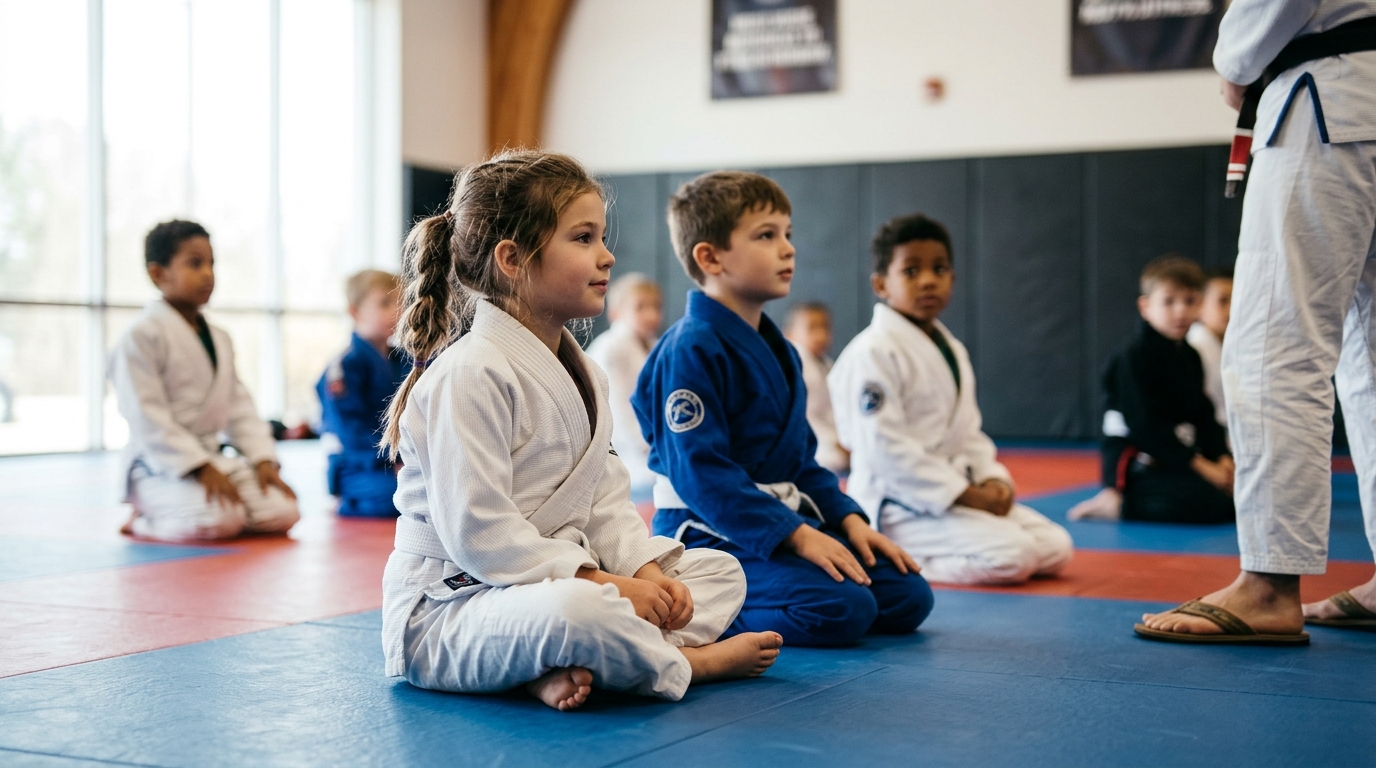
A typical kids martial arts class follows a structured sequence designed to build focus, coordination, and respect. At Knoxville Martial Arts Academy, our youth programs for ages 6 to 12 utilize a specific flow that moves from physical activation to technical application and finally to mental decompression. This predictable routine helps children understand expectations and build confidence through consistent, progressive learning.
1. Dynamic Warm-Up and Movement Activation
Dynamic movement prepares the body and mind for focused training. The class begins with a dynamic warm-up that raises the heart rate and loosens the joints. Instructors guide students through a series of controlled movements, such as high knees, arm circles, and light jogging. This phase is crucial for injury prevention and helps shift the child's attention from the outside world to the mat.
2. Rules, Respect, and Mindset Check-In
3. Fundamental Technique Instruction
Clear demonstration and explanation build the foundation of new skills. The instructor introduces one or two specific techniques, such as a basic block, a kick, or a grappling position. The coach demonstrates the movement slowly, breaking it down into simple steps. Students then practice these movements in a controlled, non-resistive manner, focusing on proper form, balance, and posture.
4. Guided Drills and Repetition
Repetitive practice builds muscle memory and coordination. Students perform the newly learned techniques in pairs or small groups. The instructor circulates the room, offering individual corrections and encouragement. This phase allows children to repeat the movements multiple times, which is essential for developing the neural pathways required for automatic execution. The focus remains on precision rather than speed or power.
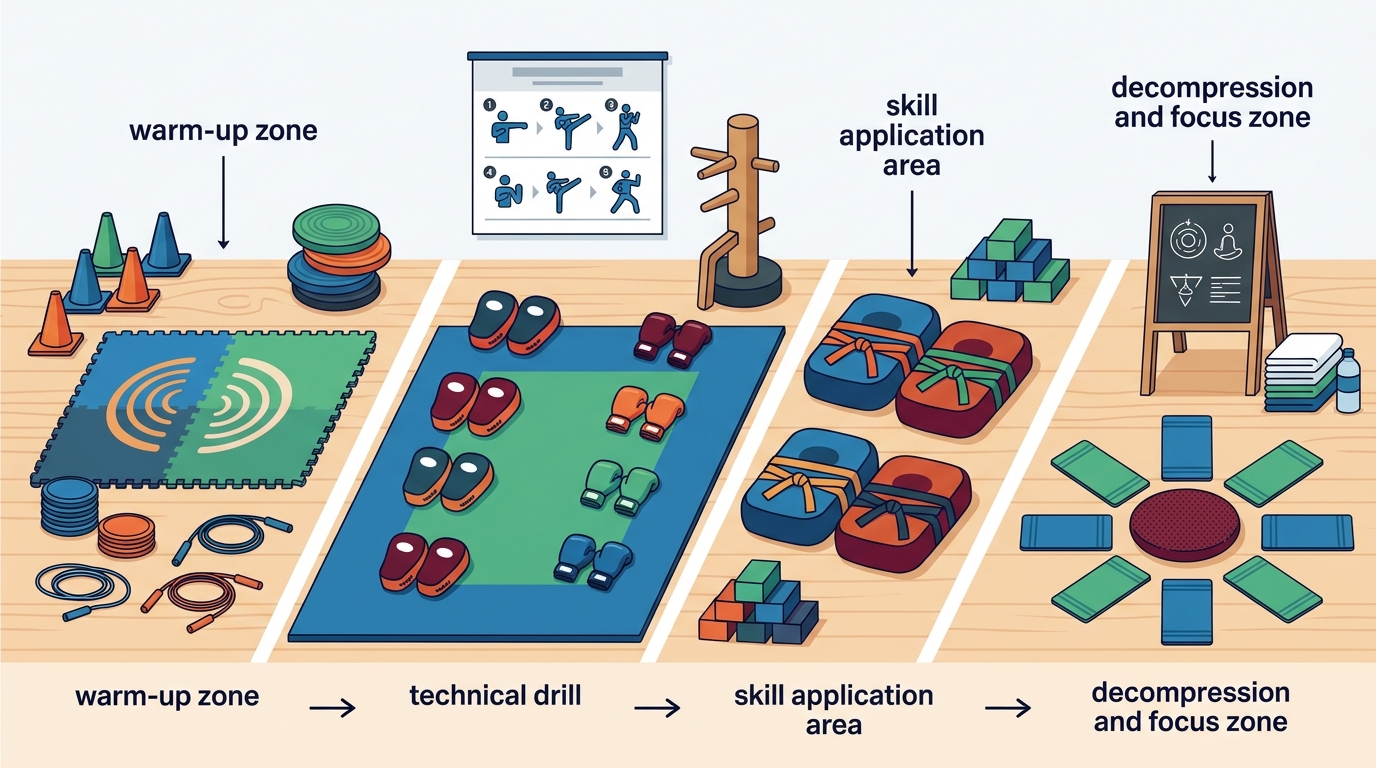
5. Game-Based Application and Problem Solving
Interactive games translate static drills into dynamic, real-world skills. Knoxville Martial Arts Academy utilizes a Constraints-Led Approach, where students apply techniques in game-like scenarios. Instead of rigid lines, children solve problems under light resistance or specific rules. This method builds adaptability and decision-making skills, teaching them how to use their techniques when an opponent is moving and reacting. It is the bridge between knowing a move and being able to use it effectively.
6. Cool-Down and Physical Decompression
Slow, controlled movements help the body recover and relax. As the energy of the class winds down, the instructor leads a cool-down routine. This includes static stretching and deep breathing exercises. The goal is to lower the heart rate gradually and release muscle tension. This physical decompression signals to the child's body that the high-intensity phase is over, promoting recovery and reducing soreness.
7. Closing Circle and Reflection
Verbal reflection reinforces learning and builds community. The class ends with a closing circle where students sit together. The instructor may ask questions about what they learned or how they felt. Students often share one thing they are proud of or one thing they want to improve. This final step fosters a sense of belonging and allows the child to process the experience mentally before leaving the mat.
Choosing the Right Class Structure
When selecting a martial arts program for a child, look for a curriculum that balances physical activity with character development. A well-structured class should have a clear beginning, middle, and end, with time dedicated to both technical skill and behavioral expectations. At Knoxville Martial Arts Academy, our youth programs are designed to provide this comprehensive experience, ensuring that children develop not only as athletes but as respectful and confident individuals.
Frequently Asked Questions
How long is a typical kids martial arts class?
Most kids martial arts classes last between 45 and 60 minutes. This duration is ideal for maintaining the attention span of children aged 6 to 12 while providing enough time for a complete warm-up, instruction, practice, and cool-down.
Do kids need to be in shape to start martial arts?
No, children do not need to be in shape to start. Martial arts classes are designed to accommodate all fitness levels. The dynamic warm-up and progressive nature of the drills help students build fitness gradually as they learn new skills.
What is the difference between drills and sparring in kids classes?
Drills are controlled, repetitive practices used to build muscle memory and form. Sparring, or live practice, involves applying techniques against a resisting partner. In youth programs, sparring is often modified into game-based scenarios to ensure safety and focus on problem-solving rather than competition.
How does the cool-down benefit a child's body?
The cool-down helps lower the heart rate and stretch muscles that were used during the class. This reduces the risk of injury and muscle soreness, helping the child's body recover more effectively after physical activity.
Can children with ADHD benefit from martial arts classes?
Many children with ADHD find that the structured environment and physical activity of martial arts help them focus. The clear rules and repetitive nature of the drills can provide a sense of order and accomplishment that supports their development.
Start Your Child's Journey
Understanding the structure of a martial arts class helps parents feel confident in their choice of program. At Knoxville Martial Arts Academy, we are committed to providing a safe, structured, and supportive environment for your child. To see how our youth programs work in practice, you can explore our Youth Martial Arts program or visit our home page to learn more about our academy's culture and philosophy.