
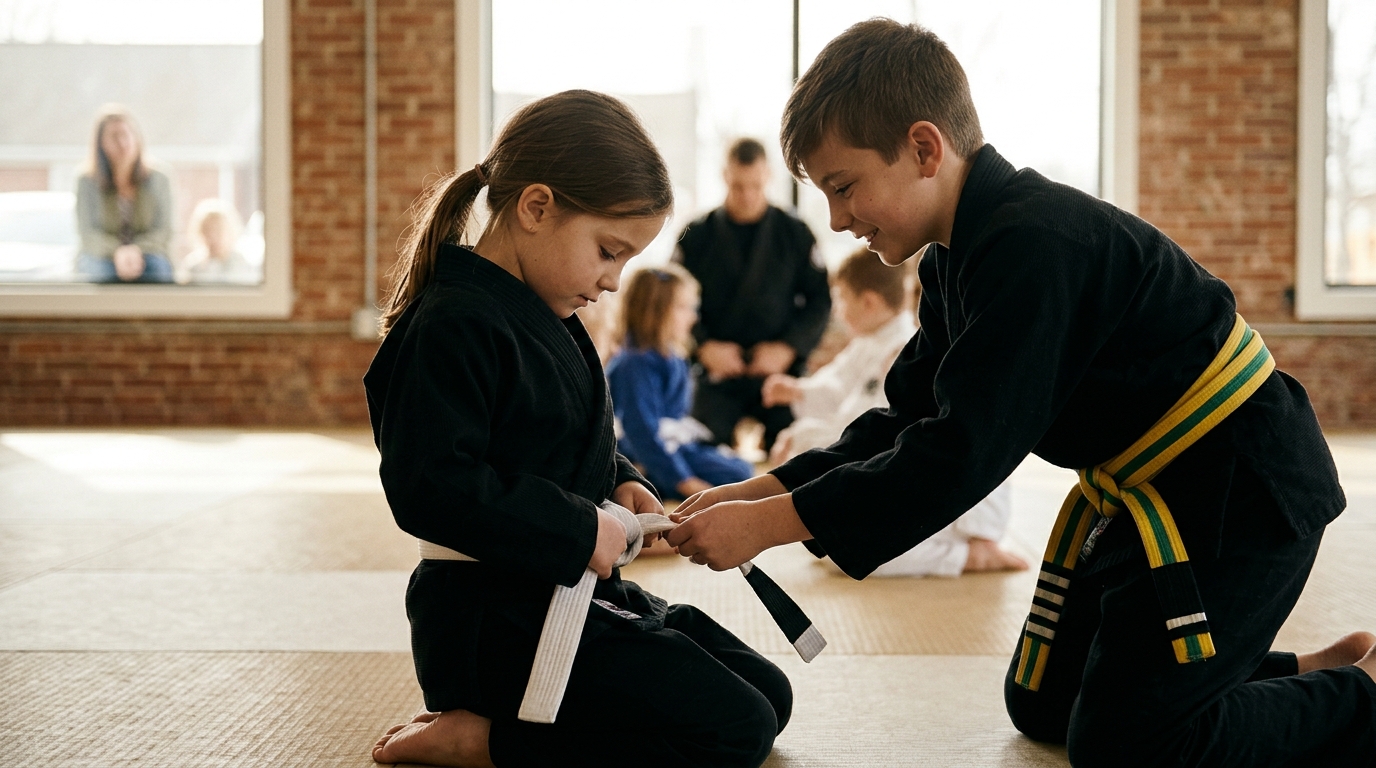
Confidence in children is not a static trait but a dynamic process built through repeated, successful experiences. In the context of Youth Martial Arts, this development follows a predictable psychological and physical trajectory. Understanding these stages helps parents and coaches support a child's growth effectively. At Knoxville Martial Arts Academy, we observe these phases consistently across our youth programs, from the youngest participants to pre-teens.
1. Initial Exposure and Safety Assessment
Takeaway: The child is primarily evaluating the environment, not the skill.
When a child first enters a new training space, their brain is in a state of high alert. They are scanning for social cues, checking if the coaches are approachable, and determining if the other students are friendly. This stage is less about learning a technique and more about establishing a baseline of psychological safety. If the environment feels chaotic or intimidating, the child will shut down. If it feels welcoming, they begin to lower their defenses. For additional details, review the Brazilian Jiu Jitsu.

2. Motor Skill Familiarity
Takeaway: Physical competence begins with simple, repeatable movements.
Once the child feels safe, they begin to engage with the physical aspects of the sport. This involves learning basic stances, how to bow, and simple strikes or holds. The goal here is not mastery but familiarity. As the child repeats these movements, they start to understand how their body moves in space. This physical literacy is the foundation upon which all future confidence is built. It transforms the unknown into the known. For additional details, review the mma.
3. The First Small Wins
Takeaway: Confidence is fueled by the accumulation of micro-successes.
This is the critical turning point where a child realizes they can actually do the things they are being asked to do. They might successfully execute a takedown on a cooperative partner or land a clean kick on a bag. These small victories create a