
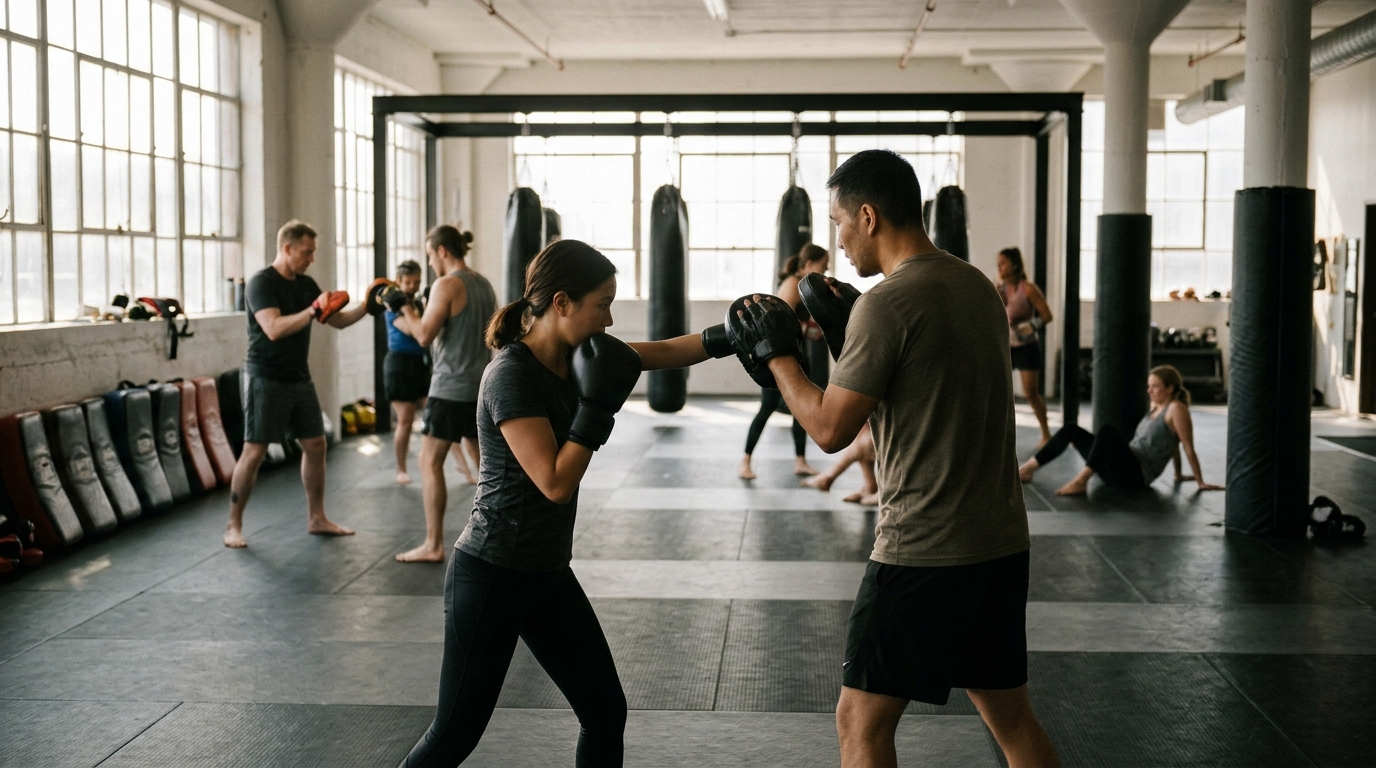
As a beginner in Knoxville, you should expect a structured environment that prioritizes safety, technical fundamentals, and community support over aggressive competition. Knoxville Martial Arts Academy focuses on integrated combat efficiency, ensuring you learn real stand-up mechanics without the intimidation often found in traditional gyms. Your first sessions will center on footwork, basic strikes, and building a foundation of confidence in a supportive setting.
The First Session: Structure and Safety
Your initial class will likely begin with a dynamic warm-up to prepare your joints and muscles for movement. Instructors typically break down the basics of stance, balance, and guard position before introducing any striking. This phase is critical because proper posture is the foundation of all effective kickboxing. You will not be thrown into sparring immediately. Instead, you will practice controlled movements, ensuring your body understands the mechanics of a punch or kick before you add speed or power.
Safety is the primary focus during this introductory phase. Coaches monitor your form closely to prevent injury and build good habits. Instructors focus on recognizing personal boundaries and maintaining a respectful, structured environment. For a beginner, this means you can focus on learning without worrying about being pressured or mistreated.
Technical Fundamentals: Striking and Footwork
Kickboxing is a technical art that requires precision. You will spend significant time learning the four primary strikes: the jab, cross, hook, and uppercut. Each strike has specific rules regarding hand position, rotation, and retraction. Footwork is equally important, as it allows you to control distance and angle. You will practice moving forward, backward, and laterally while maintaining your balance. This might feel awkward at first, but it is the key to becoming a dangerous and effective striker.
Many beginners worry about their lack of flexibility or strength. However, kickboxing is designed to work with your body, not against it. You will learn to generate power from your hips and legs, not just your arms. This biomechanical approach allows you to deliver effective strikes with minimal effort. As you progress, you will add kicks, such as the roundhouse and front kick, to your repertoire. The goal is to build a complete striking system that works for your unique physical attributes.
Training Methodology: Alive vs. Static Drills
Traditional martial arts gyms often rely on static drills, where students punch the air in unison. While this builds muscle memory, it does not teach you how to react to a moving opponent. KMAA uses a different approach called the Constraints-Led Approach (CLA). This method involves live, game-like scenarios where you must solve problems under realistic pressure. For example, you might practice striking a partner who is moving away or blocking your shots. This forces your brain to adapt and develop real timing and distance management.
This "alive" training model is crucial for beginners because it bridges the gap between practice and real-world application. You will learn to read your opponent's movements and adjust your strategy on the fly. This type of training builds martial intelligence, which is far more valuable than rote memorization. You will find that your skills transfer more effectively to sparring and self-defense situations when you have trained in dynamic, unpredictable environments.
Community and Culture: Finding Your Place
One of the most surprising aspects of kickboxing for beginners is the community. You will quickly realize that the gym is a third place, a space that is neither home nor work. You will train alongside people of all ages, skill levels, and backgrounds. This diversity creates a rich learning environment where you can ask questions without fear of judgment.
A positive academy culture encourages you to support your training partners and celebrate their successes. You will not be competing against your classmates; you will be growing alongside them. This supportive atmosphere is particularly important for beginners who may feel out of place or insecure. You will find that the bonds you form on the mats extend beyond the gym, creating a lasting network of friends and mentors.
Progression and Long-Term Growth
As a beginner, you will experience rapid initial progress. The first few weeks often bring noticeable improvements in fitness, coordination, and confidence. However, it is important to manage your expectations. Real skill acquisition takes time and consistent effort. You will encounter plateaus where progress seems to slow down. This is a normal part of the learning process. The key is to stay committed and trust the system, continuing to train consistently in a structured curriculum.
Long-term growth in kickboxing is not just about physical fitness. It is about developing discipline, resilience, and mental toughness. You will learn how to handle failure, manage stress, and set goals. These life skills are often more valuable than the martial arts techniques themselves. As you continue your journey, you will find that kickboxing becomes a way of life, a practice that enriches every aspect of your existence.
Key Takeaways
- Beginner classes focus on safety, posture, and basic striking mechanics before introducing sparring.
- The Constraints-Led Approach (CLA) uses live, game-like scenarios to build real timing and adaptability.
- Community and culture are central to the experience, with a strong emphasis on mutual support and belonging.
- Progression is structured, helping you develop your skills steadily over time.
- Kickboxing builds not only physical fitness but also mental resilience and discipline.
- Coaches maintain clear boundaries and a respectful training environment for all students.
Frequently Asked Questions
Do I need to be in shape to start kickboxing?
No, you do not need to be in shape to start. Kickboxing is an excellent way to improve your fitness. Classes are designed to accommodate all fitness levels, and instructors will modify exercises to suit your abilities. You will build strength and endurance gradually as you progress.
Will I be sparring in my first class?
Typically, no. Your first few classes will focus on learning the basics of striking, footwork, and safety. Sparring is introduced only after you have mastered the fundamental techniques and are comfortable with the training environment. This ensures your safety and builds your confidence.
What should I wear to my first class?
You should wear comfortable athletic clothing that allows for a full range of motion. Most gyms require you to wear closed-toe shoes or train barefoot, depending on their specific rules. It is a good idea to bring a water bottle and a towel. You can check the specific dress code for KMAA before your first visit.
How long does it take to see results?
You will likely notice improvements in your fitness and coordination within the first few weeks. However, mastering the technical aspects of kickboxing takes longer. Consistent attendance and effort are key to seeing significant progress.
Is kickboxing safe for beginners?
Yes, kickboxing is safe for beginners when taught by qualified instructors in a controlled environment. Safety is the top priority in beginner classes. Instructors focus on proper technique and form to prevent injury, creating a secure and respectful environment for students.
Start Your Journey at KMAA
If you are ready to begin your kickboxing journey in Knoxville, Knoxville Martial Arts Academy is the place to start. Our classes are designed to welcome beginners and provide a supportive, safe environment for learning. Visit our kickboxing page to learn more about our programs and schedule. We look forward to welcoming you to the KMAA family. Learn more: About Knoxville Martial Arts.