
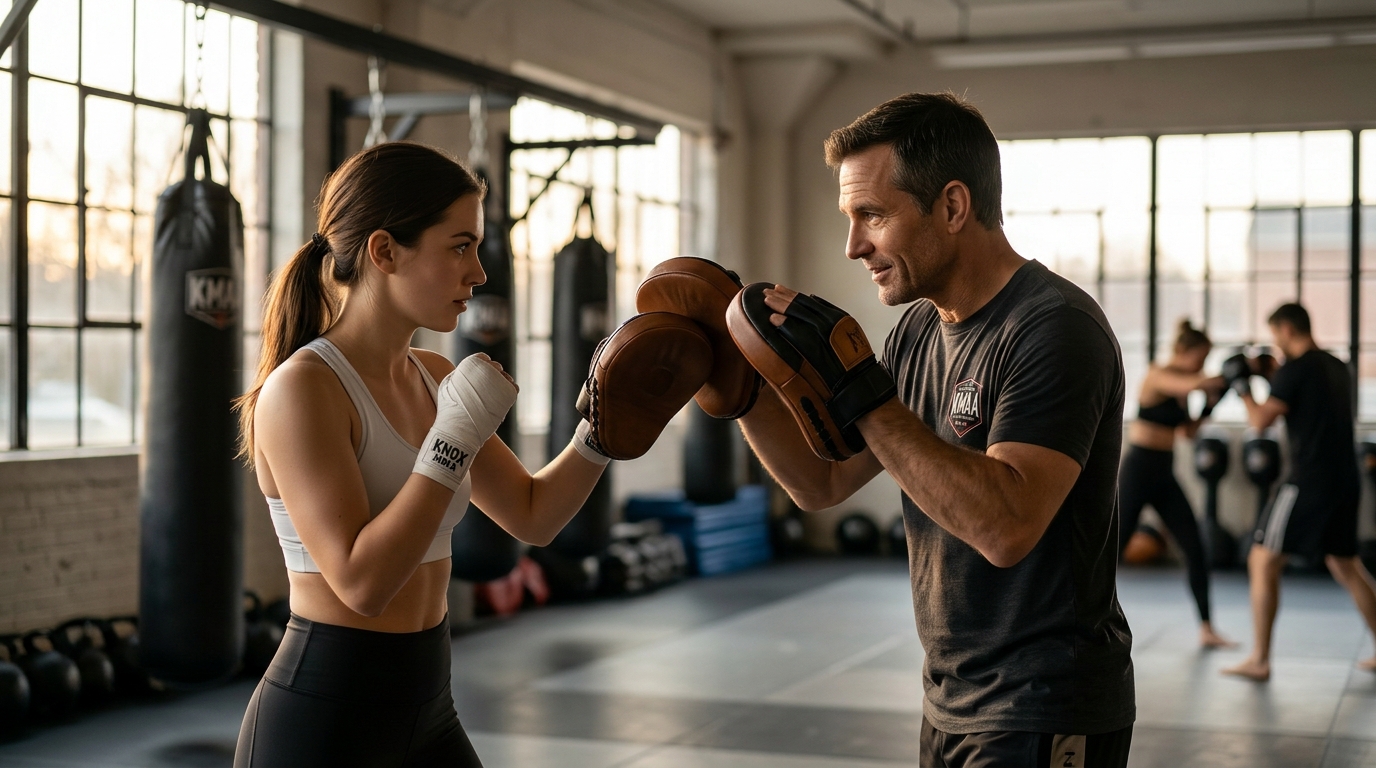
Starting kickboxing with experienced coaches requires a clear roadmap to ensure safety and rapid skill acquisition. At Knoxville Martial Arts Academy, we guide students through a structured process that prioritizes biomechanical efficiency and adaptive learning. This approach ensures you build a solid foundation before advancing to complex combinations.
1. Assess Your Physical Readiness and Goals
Consult a physician and define your specific combat objectives.
Before stepping on the mats, ensure you have medical clearance to engage in high-intensity physical contact. Determine whether your primary goal is self-defense, competitive fighting, or general fitness. This clarity helps your coach tailor the intensity and focus of your early sessions.
2. Choose an Academy with Proven Coaching Lineage
Select a facility where coaches have direct experience with professional fighters.
Look for instructors who have trained athletes competing in major organizations. At Knoxville Martial Arts Academy, our coaching staff includes veterans who have worked with UFC competitors. This lineage ensures you learn techniques that are battle-tested and effective under real pressure, not just theoretical movements.
3. Master the Biomechanics of Striking
Focus on weight transfer and physics rather than just volume.
Effective kickboxing relies on generating force through proper body mechanics. Instead of simply punching the air, learn how to rotate your hips and transfer weight from your legs to your fists. This biomechanical understanding allows you to deliver powerful strikes with minimal effort, reducing the risk of injury to your joints.
4. Adopt an Ecological Training Approach
Train through live, resistance-based games to build adaptability.
Traditional drilling often fails when a real opponent moves unpredictably. We utilize the Constraints-Led Approach, which involves solving problems in game-like scenarios. This method forces your brain to develop genuine timing and decision-making skills, ensuring your techniques work against a resisting partner rather than a stationary bag.
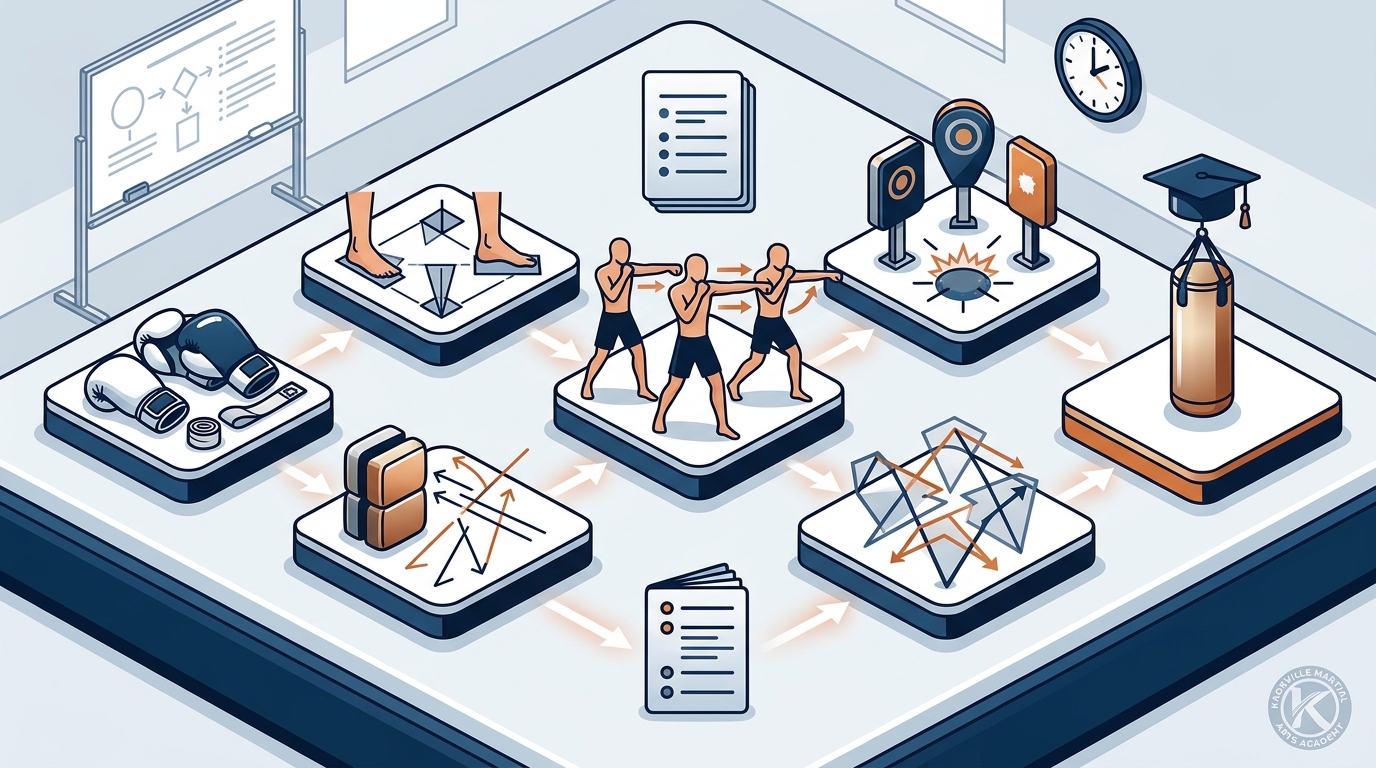
5. Prioritize Safety and Consent Protocols
Verify that the gym has strict safety standards for close-contact sports.
Combat sports require deep trust and physical vulnerability. Ensure the academy has a formal protocol for managing power dynamics and enforcing consent. Our CombatCare system is designed to protect students by establishing clear boundaries and ensuring that every interaction on the mat is respectful and safe.
6. Integrate Striking with Grappling Awareness
Learn to defend against takedowns while striking.
Pure kickboxing can leave you vulnerable to wrestlers and grapplers. A modern kickboxing curriculum should teach you how to maintain a stance that protects against takedowns. By understanding the threat of the ground game, you can adjust your distance and posture to remain dangerous at every range without exposing your hips.
7. Commit to Consistent, Data-Driven Progression
Track your metrics and trust the long-term process.
Progress in martial arts is not linear. Use a data-driven system to track your improvements in speed, accuracy, and endurance. Consistency is key to overcoming plateaus. By following a structured roadmap, you can measure your evolution and stay motivated even when immediate results are not visible.
Choosing the Right Path
Select a program that balances technical precision with adaptive, live training. The best kickboxing experience comes from coaches who understand both the science of movement and the reality of combat.
Frequently Asked Questions
Do I need prior martial arts experience to start kickboxing?
No, our programs are designed for beginners. We start with fundamental movement and biomechanics before introducing complex combinations. The goal is to build a strong foundation that allows you to progress safely and effectively.
How does training with pro-level coaches differ from a standard gym?
Pro-level coaches bring insights from high-stakes competition. They teach you how to manage pressure, conserve energy, and adapt to different fighting styles. This experience translates into more efficient and effective training for you.
Is kickboxing safe for beginners?
Yes, when taught with proper safety protocols. We emphasize controlled sparring and strict consent rules. Our safety framework ensures that all students, regardless of experience, can train in a respectful and secure environment.
Can I learn kickboxing if I am not athletic?
Absolutely. Martial arts is a skill that can be developed by anyone. We focus on building athleticism through specific drills and games. You do not need to be a professional athlete to start; you just need to be willing to learn and practice.
How long does it take to see improvement?
Improvement varies by individual, but most students notice better coordination and confidence within the first few weeks. Significant technical progress typically takes several months of consistent training. Patience and regular attendance are the most important factors.
Start Your Evolution
Ready to begin your kickboxing journey? Visit Knoxville Martial Arts Academy to explore our programs and meet our coaching team. We are here to help you build real confidence and skill.