
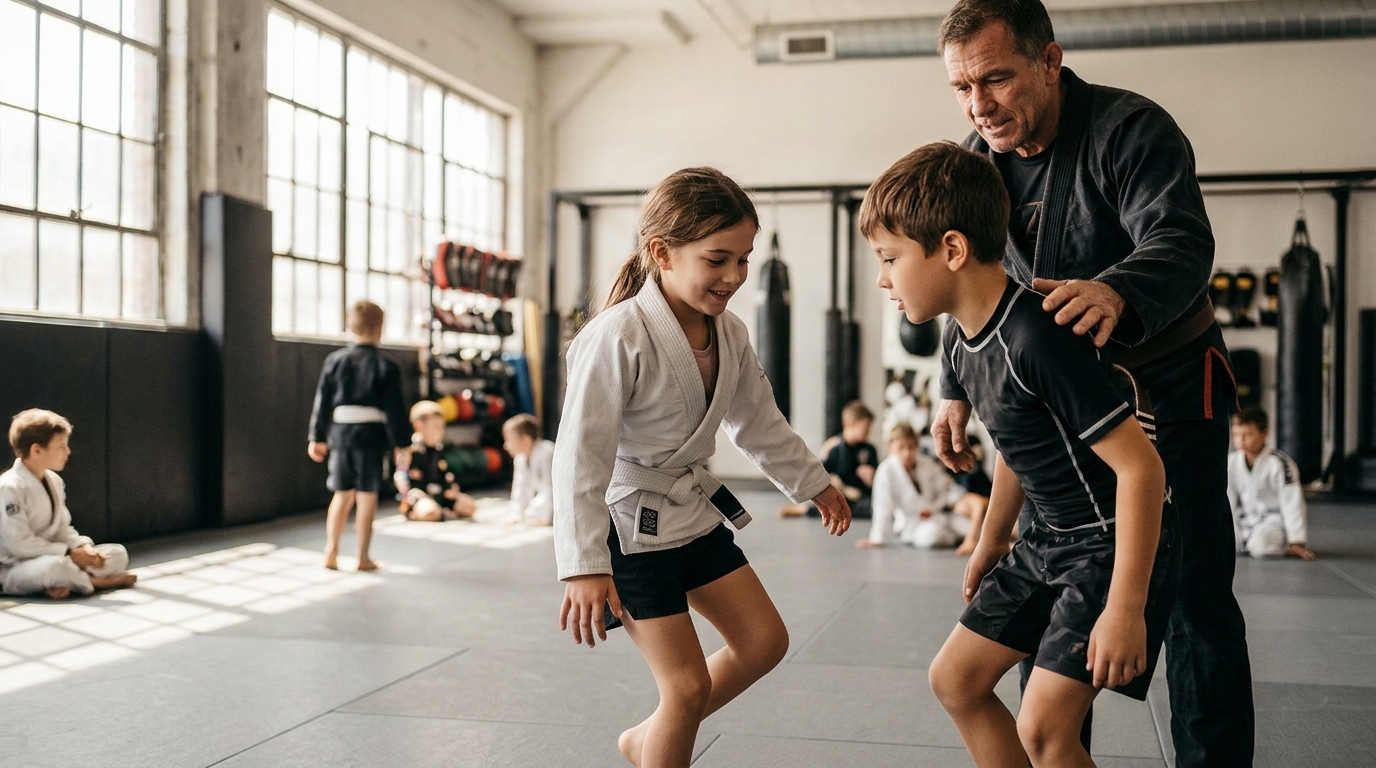
Parents in Knoxville often ask which martial arts schools offer a structured, safe program for kids ages 6 to 12. The answer depends on verifying safety protocols, coaching credentials, and curriculum design. This guide covers how to evaluate local options, what to ask, and how to verify claims. We focus on the specific needs of school-aged children in the Knoxville, Tennessee area.
How to Choose a School
Choosing a martial arts school for a child is a significant decision. You are not just buying a gym membership; you are selecting a developmental partner. The primary differentiator is the training methodology. Many gyms rely on rote memorization of static techniques. This approach often fails under pressure because children learn to perform moves in a vacuum, not in dynamic situations.
A superior program uses an ecological approach. Ecological Dynamics is a training method that focuses on adapting to changing environments rather than memorizing fixed patterns. Look for schools that use game-based learning. In these classes, children solve problems with resistance. They learn to adjust their movements based on what their partner does. This builds neural pathways for adaptability and quick thinking. It is far more effective for real-world confidence than standing in a line and punching the air.
Also evaluate the culture. A good school for kids ages 6 to 12 fosters a family-like environment. The students should interact with each other respectfully. The coaches should be approachable but firm. If the atmosphere feels like a military boot camp or a chaotic playground, it may not be the right fit. You want a balance of structure and fun.
What to Ask Before Committing
Do not rely on marketing materials alone. Visit the facility and ask specific questions. These questions will reveal the true quality of the program.
Questions About Safety
Ask how the school handles physical contact. Is there a formal safety protocol? CombatCare is a safety framework that ensures consent and boundaries are respected in combat sports. If a school cannot name a specific safety protocol, be cautious. They should have background checks for all staff. They should have a clear policy on physical boundaries. Ask how they handle a child who is uncomfortable with a specific drill.
Questions About Curriculum
Ask what the child will learn in the first month. Avoid vague answers like "self-defense." Ask for specifics. Will they learn balance? Coordination? How to fall safely? How to manage their energy? A good coach can explain the developmental goals for each age group. They should be able to tell you how the curriculum progresses from age 6 to age 12.

Questions About Coaching
Ask about the coaches' experience with children. Teaching adults is different from teaching kids. Ask how long the lead coach has been teaching this specific age group. Ask about their certification in child development or safety. You want a coach who understands how a 7-year-old brain works, not just a black belt who knows how to throw a punch.
How to Verify Credentials
Claims on a website are easy to make. Verification is harder. Start by checking the coaches' backgrounds. Most reputable martial arts organizations have online directories. You can search for the coach's name to see if their rank is recognized by a major federation. If the rank is not listed, ask for proof. A legitimate coach will provide documentation.
Check for business registration. In Tennessee, you can look up business entities. Ensure the school is a registered business. This is a basic sign of legitimacy. Also, look for reviews from other parents. Read the negative reviews as carefully as the positive ones. How does the school respond to complaints? A professional school addresses issues calmly and constructively. If they are defensive or dismissive, that is a red flag.
Visit the facility in person. Look at the mats. Are they clean? Are they well-maintained? Check the ventilation. A stuffy, poorly ventilated room is a health hazard. Look at the equipment. Is it in good condition? These details reflect the management's attention to detail and care for their students.
How the Program Works
Understanding the structure helps you set realistic expectations. Most youth programs for ages 6 to 12 follow a similar arc, but the quality varies.
The First Month
The first month is about fundamentals. Children learn how to listen, how to follow instructions, and how to respect their partners. They learn basic movement skills. They learn how to fall without getting hurt. This is not about fighting. It is about building the foundation. Expect your child to come home tired but happy. They may be sore. This is normal.
The First Year
Over the first year, the curriculum expands. Children begin to learn specific techniques. They start to understand the concepts of leverage and balance. They begin to compete in low-stakes environments, such as in-house tournaments. These events are designed to be fun and supportive, not high-pressure. The goal is to build confidence through competence. As they master small challenges, their self-belief grows.
Long-Term Progression
As children age, the complexity increases. They learn to integrate different skills. They learn to manage their emotions under pressure. They learn to set goals and work toward them. The program should evolve with the child. A static curriculum that does not adapt to the child's growth will lose their interest. Look for a school that offers a clear path from beginner to advanced.
What It Costs
Consider the total cost of ownership. This includes the monthly fee, the initial gear (gi, rash guard, belt), and any competition fees. A cheaper monthly fee might be offset by high gear costs. Compare the total first-year cost, not just the monthly rate. Also, consider the value. A more expensive program with better coaching and safety might be a better investment than a cheap one with poor instruction.
Look for flexibility. Does the school offer a pause option? If your child is sick or traveling, can you pause the membership without losing your spot? This is a useful feature for busy families. Avoid schools that lock you into long-term contracts with no flexibility. You want a partnership, not a prison.
Common Mistakes to Avoid
Parents often make the same mistakes when choosing a school. Avoid these pitfalls.
Choosing Based on Price Alone
The cheapest option is rarely the best. You are paying for the coach's time and expertise. If the price is too low, ask how they make money. Do they have high turnover? Do they use unqualified staff? Low prices often correlate with low quality. Do not sacrifice safety and quality for a few dollars a month.
Ignoring the Culture
A great curriculum in a toxic culture is a waste of time. If the students are mean to each other, your child will not thrive. If the coaches are arrogant, your child will not feel safe. Culture is contagious. Choose a school where the vibe is positive and supportive. Watch the interactions during a trial class. Do the older kids help the younger ones? Do the coaches encourage everyone? These are signs of a healthy culture.
Expecting Overnight Results
Martial arts is a long-term process. Do not expect your child to become a black belt in six months. Do not expect them to be "bully-proof" after one month. Progress is slow and steady. Set realistic expectations. Celebrate small wins. If you are frustrated by the pace, you may be in the wrong program. Look for a school that emphasizes process over outcome.
Martial Arts vs. Alternatives
Parents often compare martial arts to other youth activities. Here is how it stacks up.
| Activity | Focus | Physical Contact | Individual Growth |
|---|---|---|---|
| Team Sports (Soccer, Basketball) | Teamwork, Endurance | Low to Moderate | Dependent on Team Role |
| Dance/Gymnastics | Flexibility, Aesthetics | None | High Individual Focus |
| Martial Arts (BJJ/MMA) | Problem Solving, Resilience | High (Controlled) | High Individual Focus |
Martial arts offers a unique combination of physical and mental challenges. It teaches children how to handle conflict and pressure. It builds resilience in a way that other activities do not. However, it is not for everyone. If your child is sensitive to physical contact, they may prefer a non-contact activity. Know your child. Choose the activity that fits their personality and goals.
For Specific Situations
Every child is different. Here is how to approach specific scenarios.
The Shy Child
If your child is shy, look for a school with a strong community culture. They should feel welcomed, not judged. A school that emphasizes family and support will help a shy child open up. Avoid schools that are overly aggressive or competitive. A gentle, supportive environment will help them build confidence gradually.
The Energetic Child
If your child has high energy, they need a program that channels that energy productively. Look for a school with dynamic, game-based classes. They should be moving constantly. A static, drill-heavy class will bore them. A lively, interactive class will keep them engaged. They will learn to control their energy, not just release it.
The Child with Learning Differences
If your child has ADHD or other learning differences, look for a coach who is patient and adaptive. They should be able to modify instructions to suit the child's needs. A good coach will work with you to create a plan. They will focus on the child's strengths. They will celebrate small victories. This approach can be incredibly beneficial for children with learning differences.
Rules and Protections
Understanding the rules protects your child. Most schools have a code of conduct. This code outlines the expected behavior of students and parents. It also outlines the school's policies on safety and discipline. Read this code carefully. Make sure you agree with it. If the code is vague or missing, that is a red flag.
Know your rights as a parent. You have the right to observe your child's class. You have the right to ask questions. You have the right to withdraw your child at any time. A legitimate school will respect these rights. They will not pressure you to stay if you are unhappy. They will work with you to find a solution. If they do not, it is time to leave.
Local Knoxville Specifics
Knoxville has a vibrant martial arts community. There are many options, from traditional dojos to modern MMA gyms. The local scene is known for its high level of competition. Many schools in Knoxville have produced national and international competitors. This means the coaching quality is generally high. However, it also means the competition for students is fierce. Do a thorough vetting process. Do not rely on reputation alone. Visit the schools. Talk to the coaches. See the classes for yourself.
Consider the location. Traffic in Knoxville can be unpredictable. Choose a school that is convenient for your family. A school that is 30 minutes away may be too far for a 6-year-old. Consistency is key. If the commute is too long, your child will not attend regularly. Choose a school that is easy to get to. This will help you maintain consistency.
Timing Your Enrollment
When should you start? There is no perfect time. However, there are some considerations. Starting at the beginning of a school year can be helpful. Your child is already in a routine. They are used to being in a classroom. This can make the transition to martial arts easier. Starting in the middle of the year is also fine. Most schools are used to new students joining at any time. They will help your child catch up.
Consider your family's schedule. If you are busy with work and other activities, choose a time that works for you. Consistency is more important than the specific day or time. If you can only attend on Tuesdays and Thursdays, choose a school that offers classes on those days. Do not choose a school that only offers classes on days you cannot attend. You will not be able to maintain consistency.
Results Over Time
What can you expect to see? In the first few months, you will see improved physical fitness. Your child will be more coordinated. They will have better balance. They will be more aware of their body. In the first year, you will see improved confidence. They will be more willing to try new things. They will be more resilient in the face of challenges. In the long term, you will see improved character. They will be more disciplined. They will be more respectful. They will be more empathetic. These are the true benefits of martial arts. They last a lifetime.
Key Takeaways
- Choose a school that uses an ecological, game-based training method.
- Verify the coaches' credentials and safety protocols.
- Visit the facility in person to assess the culture and cleanliness.
- Consider the total cost of ownership, including gear and fees.
- Avoid schools with toxic cultures or rigid, drill-heavy curricula.
- Set realistic expectations; progress is slow and steady.
- Choose a convenient location to ensure consistency.
- Look for a school that respects your rights as a parent.
Frequently Asked Questions
What is the best age to start martial arts?
Most schools accept children as young as 3 or 4. However, the curriculum changes significantly at age 6. This is when children can follow more complex instructions. If you are unsure, start with a trial class to see how your child responds.
Do I need to buy a gi?
It depends on the school. Some schools provide a gi for the first few months. Others require you to buy one immediately. Ask the school about their policy. A gi is a significant investment, so make sure you are committed before buying one.
Is martial arts safe for kids?
Yes, when taught by qualified instructors in a safe environment. Look for a school with a formal safety protocol. They should have background checks for all staff. They should have a clear policy on physical boundaries.
How many classes per week should my child attend?
Two to three classes per week is a good starting point. This allows your child to practice the skills without getting burned out. You can increase the frequency as they become more comfortable.
Can my child compete?
What if my child gets injured?
Injuries can happen in any physical activity. A good school will have a first aid kit and trained staff. They will also have a clear protocol for handling injuries. Make sure you have health insurance that covers sports injuries.
Start Your Child's Journey
Choosing the right martial arts school is a critical step in your child's development. By following this guide, you can make an informed decision. Look for a school that prioritizes safety, uses modern training methods, and fosters a positive culture. Knoxville Martial Arts Academy offers a structured, safe program for kids ages 6 to 12. We use an ecological approach to training, ensuring that your child develops real skills and confidence. Visit us today to see the difference.