
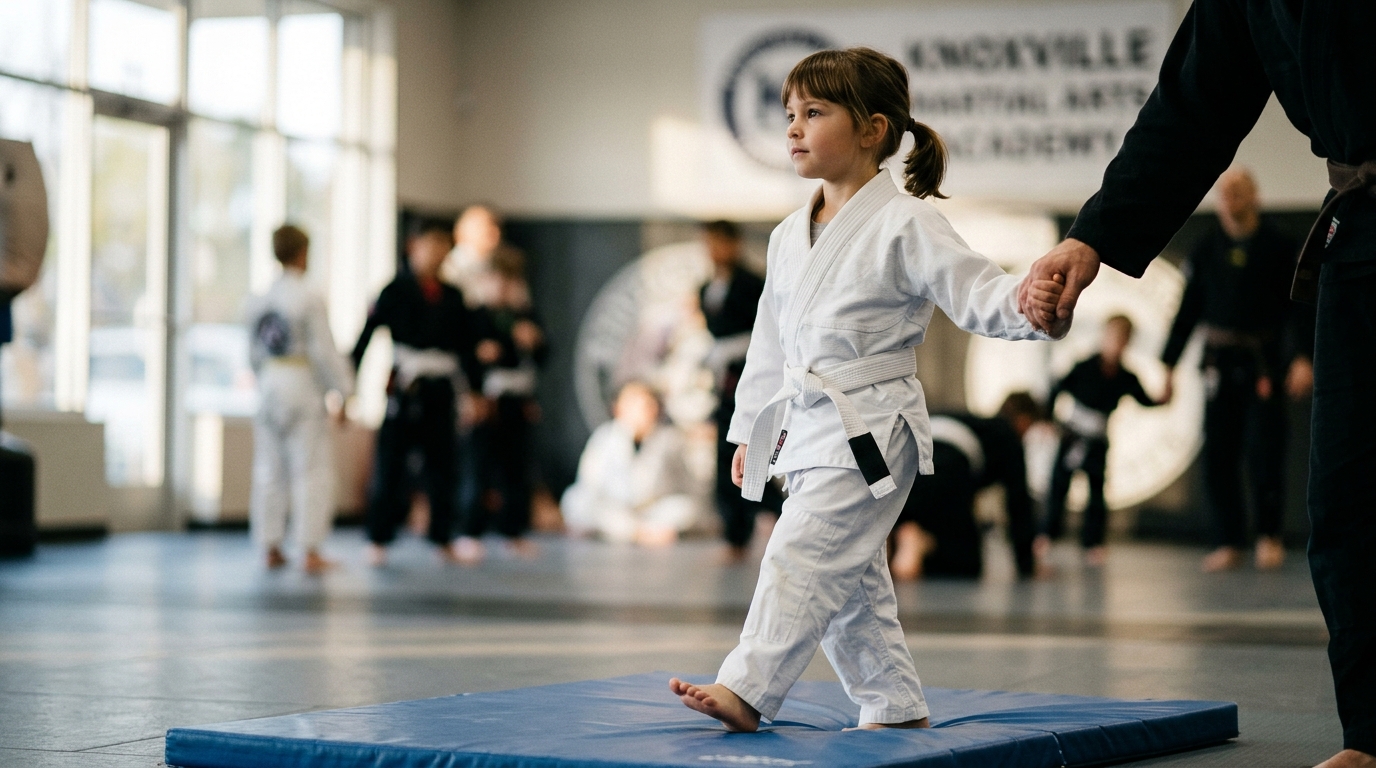
Most children begin showing noticeable signs of improved confidence within the first four to eight weeks of consistent martial arts training. This initial shift is driven by the mastery of basic movement skills and the immediate social acceptance found in a supportive training environment. At Knoxville Martial Arts Academy, we observe that confidence is not a single event but a cumulative process. It builds as children overcome small physical challenges and learn to regulate their emotions under pressure. The timeline varies by child, but the underlying mechanism remains consistent: competence creates confidence.
The First Four Weeks: Building the Foundation
The first month of training is primarily about physical literacy and social integration. Physical literacy is the foundation of movement skills, including balance, coordination, and body awareness, that allows children to interact with their environment effectively. During this phase, children are often self-conscious about their new bodies and the new social group. They are learning to listen to instructions, manage their energy, and respect boundaries. The primary confidence gain here is social. When a child realizes they belong in the group and that their peers are supportive rather than competitive, their anxiety drops. This sense of belonging is the first brick in the confidence wall.
At this stage, the focus is on the "ABCs" of athleticism: Agility, Balance, and Coordination. Children are not expected to perform complex techniques. Instead, they are learning to move with intent. For example, a child who previously struggled with standing on one foot may now be able to hold a stable stance for ten seconds. This small physical victory provides immediate feedback. The brain registers success, and the child feels a sense of agency. This is the critical window where the habit of showing up is formed. Consistency during these first four weeks is more important than technical perfection.
Weeks Five to Eight: The Competence Loop
Between weeks five and eight, the training shifts from basic movement to specific skill acquisition. Self-efficacy is the belief in one's own ability to succeed in specific situations, and it is the core driver of long-term confidence. As children begin to master specific techniques, such as a basic guard in Brazilian Jiu-Jitsu or a controlled kick in kickboxing, their self-efficacy rises. They are no longer just moving; they are solving problems. The training method used at this stage is crucial. Traditional rote memorization can lead to frustration when techniques fail under pressure. Ecological dynamics, or the Constraints-Led Approach, encourages children to discover solutions through guided play. This method builds confidence because the child feels they figured it out, rather than just being told what to do.
A concrete example of this phase is the transition from static drilling to live resistance. A child might spend two weeks learning the mechanics of a hip escape. In the fifth week, they begin to use it against a partner who offers light resistance. The moment they successfully create space and escape the hold, their confidence spikes. This is not just about the physical move; it is about the mental realization that they can control a situation. This "competence loop" is where confidence becomes durable. It is no longer just about feeling good in the group; it is about knowing they can handle a challenge.
Months Three to Six: Resilience and Identity
By the third to sixth month, confidence begins to shift from the mat to other areas of life. This is the phase where resilience is defined as the capacity to recover quickly from difficulties, and it is a key component of mature confidence. Children who have experienced failure in a safe environment learn that failure is feedback, not a permanent state. They have fallen, they have been submitted, and they have been outmaneuvered. They have also gotten back up, solved the problem, and succeeded. This cycle builds emotional regulation. A child who can stay calm when they are in a difficult position on the mat is more likely to stay calm when they face a difficult problem in school or a social conflict at home.
The identity shift is significant during this period. The child begins to see themselves as a "martial artist" or a "fighter" in a positive sense. This identity is associated with discipline, respect, and perseverance. They are no longer just a kid who takes a class; they are a member of a community with shared values. This identity provides a stable core that supports confidence. It is a source of pride that is not dependent on external validation. The child knows who they are and what they are capable of. This is the stage where parents often report the most dramatic changes in behavior and attitude.
Six Months and Beyond: The Long Game
After six months, the confidence gained through martial arts becomes a baseline trait rather than a situational response. The child has internalized the values of the training. They understand that effort leads to results. They understand that respect is earned through action. They understand that they are capable of handling pressure. This long-term confidence is characterized by stability. It does not fluctuate wildly with every win or loss. It is a quiet, steady assurance that comes from a deep well of experience. The child has a "bank account" of small victories that they can draw upon when they face new challenges.
The timeline for this long-term confidence is individual. Some children may reach this stage in six months; others may take a year. The key factor is consistency. A child who trains twice a week for a year will likely develop more durable confidence than a child who trains five times a week for two months and then stops. The process is cumulative. Each session adds to the total. The goal is not to rush the process but to support it. Parents play a crucial role in this phase by reinforcing the values of the training in daily life. They celebrate effort, not just results. They encourage persistence, not just perfection. This reinforcement helps the child generalize the confidence from the mat to the rest of their life.
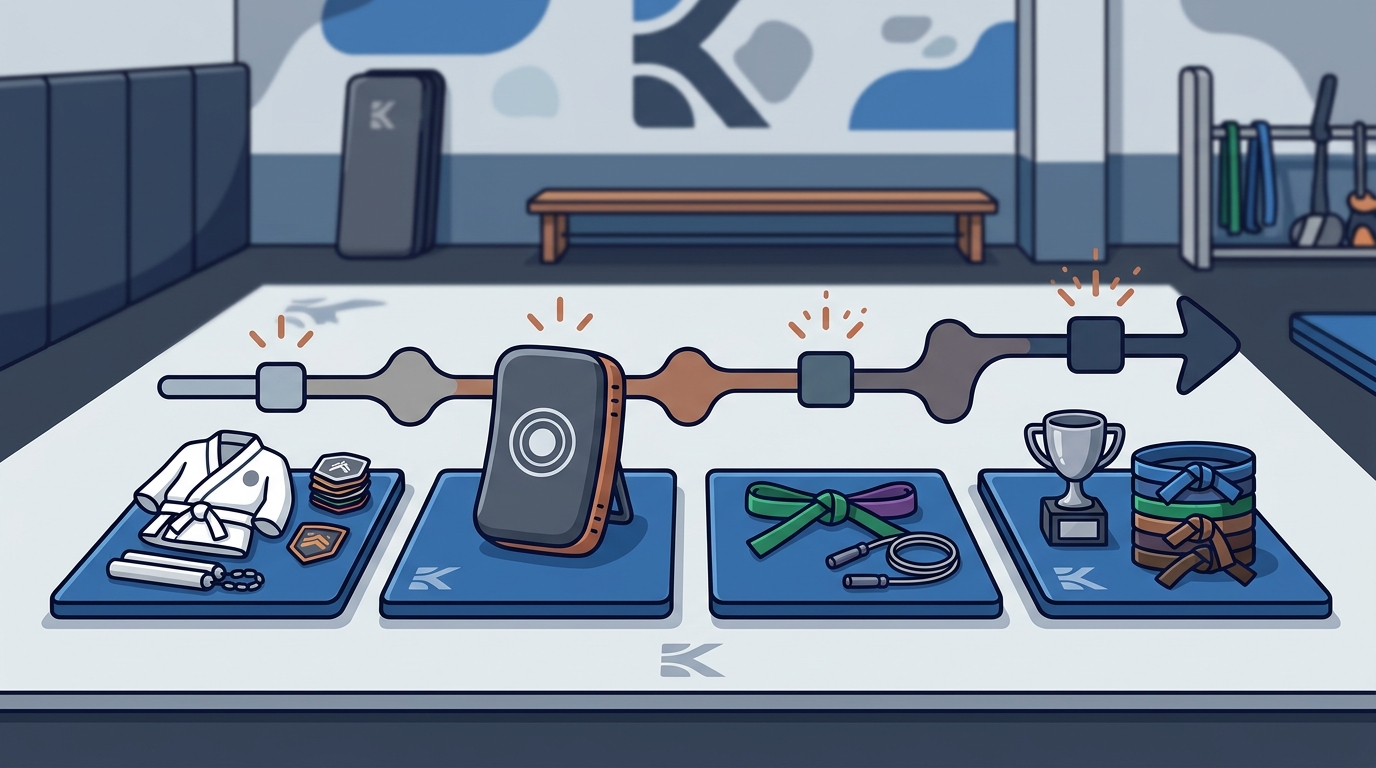
Key Takeaways
- Initial confidence gains occur within the first four to eight weeks, driven by social acceptance and basic physical literacy.
- Self-efficacy, or belief in one's ability to succeed, is the core driver of long-term confidence and builds through skill acquisition.
- Resilience, the capacity to recover from difficulty, is developed through safe exposure to failure and problem-solving.
- The Constraints-Led Approach, which uses guided play rather than rote memorization, accelerates the development of confidence by fostering a sense of agency.
- By six months, confidence often shifts from the mat to other areas of life, becoming a stable baseline trait.
- Consistency is the most important factor in the timeline; regular attendance over several months is more effective than short, intense bursts of training.
- Parents support the process by reinforcing the values of effort, respect, and persistence in daily life.
Frequently Asked Questions
How often should a child train to see confidence gains?
Consistency is more important than frequency. Training two to three times per week is ideal for most children. This frequency allows for skill acquisition and recovery. It also helps establish the habit of showing up. A child who trains regularly will see steady progress, which builds confidence over time.
What if my child is shy or introverted?
Does martial arts help with bullying?
Martial arts can help children develop the confidence and self-defense skills to deter bullying. It teaches them to set boundaries and to handle conflict calmly. However, it is not a guarantee that a child will never be bullied. The goal is to build the resilience and self-belief to handle difficult social situations effectively.
At what age can a child start martial arts?
Children can start as young as three or four years old in age-appropriate programs. These programs focus on fundamental movement skills, coordination, and socialization. The specific age depends on the child's developmental stage and the program's design. It is important to choose a program that is tailored to the child's age and ability.
How can parents support their child's confidence outside of training?
Parents can support their child's confidence by celebrating effort and progress, not just results. They can encourage their child to talk about what they learned in class. They can model the values of perseverance and respect in their own lives. They can also provide a safe space for their child to discuss any challenges they face, both on and off the mat.
Start the Journey Today
Building confidence through martial arts is a process that unfolds over time. It begins with the simple act of showing up and continues through the steady accumulation of small victories. At Knoxville Martial Arts Academy, we are committed to supporting your child through every stage of this journey. Our programs are designed to foster not just physical skill, but the mental and emotional resilience that comes with it. We invite you to explore our youth programs and see how we can help your child build the confidence they need to thrive. Visit our website to learn more about our classes and to book a trial session.