
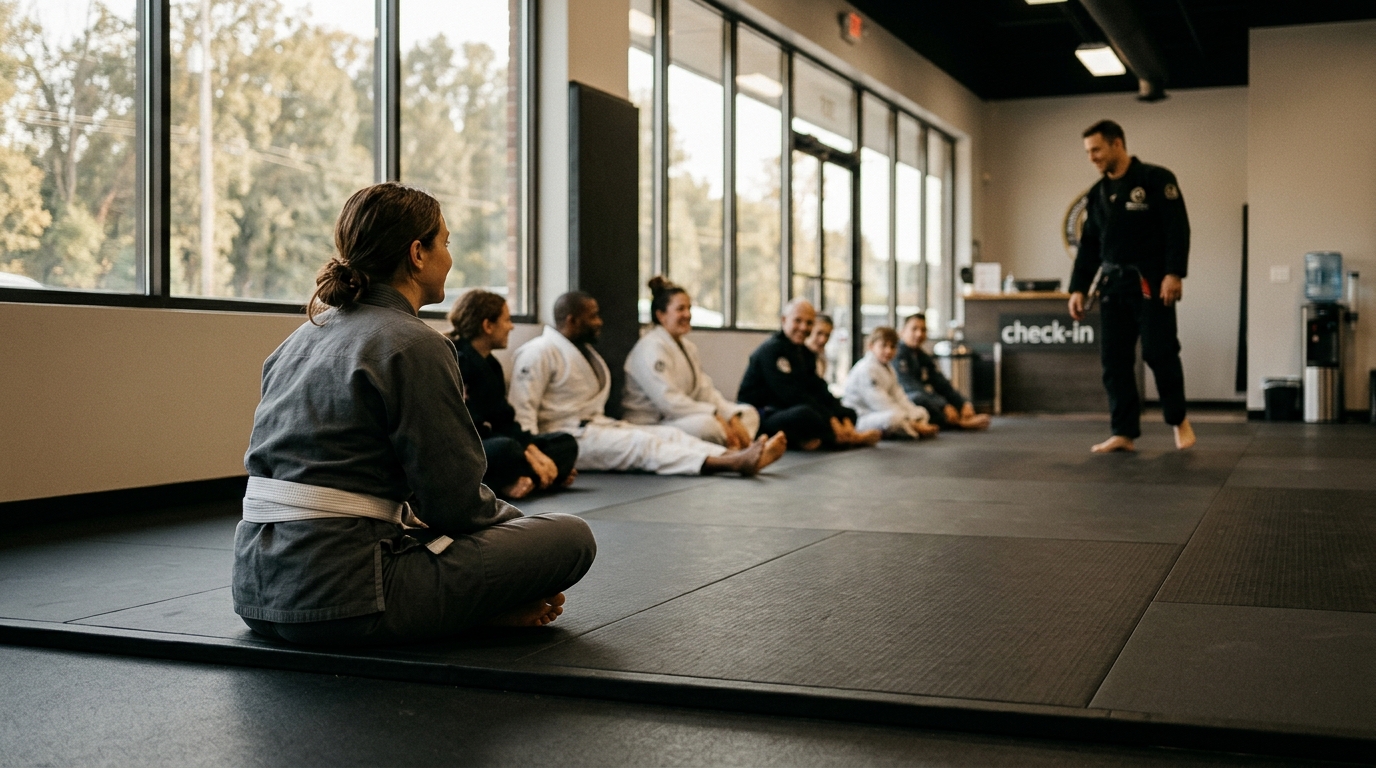
Walking into a new gym can feel intimidating, but your first session at Knoxville Martial Arts Academy is designed to be welcoming and structured. You will not be thrown into a chaotic fight immediately. Instead, you will learn basic movements, meet the community, and understand the safety protocols that guide our training. This guide breaks down exactly what happens from the moment you check in to the final bow.
Arrival and Check-In Procedures
Your first step is administrative but critical for safety. Waiver signing is among the standard first task for any new student. At KMAA, we ensure you understand the physical nature of the sport before you step on the mats. You will likely be asked to fill out a health questionnaire. This helps our coaches tailor your intensity level. If you have any pre-existing conditions, mention them during this check-in. It is not a barrier to entry; it is a tool for your safety.
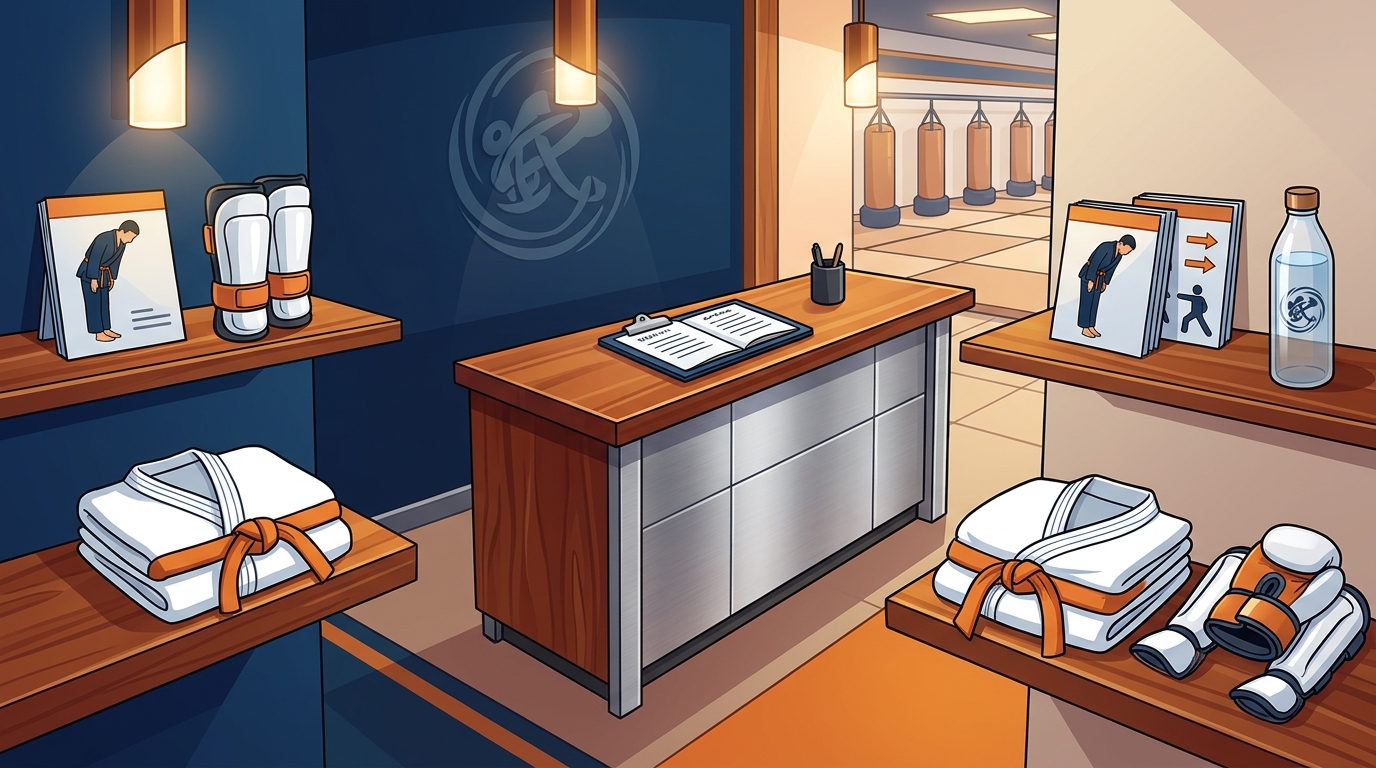
Once paperwork is done, you will be introduced to the space. You will see the mats, the striking area, and the gear storage. Take a moment to observe the current class. You will notice a respectful atmosphere. Students bow to each other and to the coaches. This ritual signals mutual respect and readiness to learn. It sets the tone for the entire session.
Required Gear and Attire
Knowing what to wear prevents awkwardness and ensures hygiene. For Brazilian Jiu-Jitsu classes, you will need a gi (uniform) and a belt. If you do not own one yet, many gyms allow you to borrow a clean gi for your first visit. For Kickboxing or MMA classes, you will wear athletic shorts, a t-shirt, and bare feet. You do not need shoes on the mats. This rule protects the surface and your feet from slipping.
Hygiene is non-negotiable in grappling arts. You must shower before class. This is a sign of respect for your training partners. You will also need a towel. Bring a water bottle, as hydration is key to performance. If you are new to BJJ, keep your fingernails trimmed short. Long nails can tear the gi or scratch a partner. These small details show you are serious about the craft.
Class Structure and Flow
A typical class follows a predictable rhythm. It begins with a warm-up. This might include jogging, dynamic stretching, or light cardio. The goal is to raise your heart rate and prepare your joints. Next, the coach will demonstrate a technique. You will watch closely, then practice it in pairs. This is where the learning happens. You will drill the move slowly, focusing on form and mechanics.
At KMAA, we use a Constraints-Led Approach to training. This means we do not just drill static moves. We create game-like scenarios where you must solve problems. For example, you might practice a takedown against a resisting partner. This builds adaptability. The class usually ends with a cool-down and a group bow. You will leave sweaty, tired, and mentally engaged. This is normal. Your brain is processing new information.
Social Dynamics and Community
One of the biggest surprises for new students is the social aspect. Martial arts is a team sport, even when you train one-on-one. You will meet people from all walks of life. At KMAA, we foster a Whānau culture, which means extended family. You will not be judged on your skill level. Everyone was a white belt once. The community is supportive. If you struggle with a move, a partner will help you. If you succeed, they will celebrate with you.
Do not feel pressured to make deep friendships immediately. Just be present and respectful. Say hello to the coach. Smile at your partners. Ask questions if you are confused. The ego-free environment means that humility is respected. You will find that the bonds formed on the mats are strong. Many students stay for years because of the community, not just the training.
Safety Protocols and Boundaries
Safety is the foundation of our academy. We have a proprietary protocol called CombatCare. This system ensures that all interactions are consensual and respectful. Coaches are trained to monitor the mats for any signs of discomfort or boundary violations. If you feel uncomfortable at any point, you have the right to stop. You can step back, tap out, or ask for a break. No one will make you feel bad for doing so. Your comfort is paramount.
Physical contact is part of the sport, but it is controlled. You will learn to manage your energy and your partner's energy. You will not be hit hard. The intensity is adjustable. If you are a complete beginner, the coach will pair you with someone experienced who knows how to go easy. This ensures you learn safely. Trust the process. Trust the coaches. Trust your own ability to set boundaries.
Post-Class Reflection and Next Steps
After your first class, you will likely feel a mix of exhaustion and excitement. This is a good sign. It means you challenged yourself. Take a moment to reflect on what you learned. Did you enjoy the physical aspect? Did you like the mental focus? Did you feel welcomed by the group? These are the questions that matter. You do not need to decide on a long-term commitment immediately. Most gyms, including KMAA, offer a day pass or intro option that allows you to try multiple classes. This gives you a broader perspective.
If you decide to continue, you will be guided through the enrollment process. You will be assigned a belt color, which signifies your rank. You will be given a training schedule. The journey ahead is long, but it is rewarding. You are not just learning to fight; you are learning to discipline yourself. The first class is just the beginning. It is the first step on a path that can change your life.
Key Takeaways
- Prepare your gear: Wear clean athletic clothes, keep nails trimmed, and bring a towel and water.
- Sign the waiver: This is a standard safety procedure, not a barrier to entry.
- Expect a structure: Classes follow a warm-up, technique, drilling, and cool-down format.
- Embrace the community: The gym is a supportive family where humility is respected.
- Know your rights: You can always stop or step back if you feel uncomfortable.
- Take your time: Use intro passes to explore different disciplines before committing.
Frequently Asked Questions
Do I need to be in shape to start martial arts?
No. You do not need to be in shape to start. Most students begin at various fitness levels. The training will help you improve your fitness over time. You will progress at your own pace.
Will I be hit during the first class?
No. You will not be hit hard. The first class focuses on learning techniques and basic movements. Any contact is controlled and consensual. You will learn to manage intensity.
What should I wear to a BJJ class?
You should wear a gi and a belt. If you do not have one, you can often borrow a clean gi for your first visit. Keep your fingernails trimmed short to avoid tearing the uniform.
Is it okay to ask questions during class?
Yes. Asking questions is encouraged. It shows you are engaged and want to learn. Coaches and partners are happy to help you understand the techniques.
How long does a typical class last?
A typical class lasts about 60 to 90 minutes. This includes warm-up, technique instruction, drilling, and cool-down. The exact duration may vary by program.
Can I try different martial arts disciplines?
Yes. You can try BJJ, Kickboxing, and MMA. Many gyms offer intro passes that allow you to sample different classes. This helps you find the discipline that fits your goals.
Start Your Journey at KMAA
Your first class is a safe, structured, and welcoming experience. You will learn the basics, meet a supportive community, and understand the safety protocols that protect you. At Knoxville Martial Arts Academy, we are ready to guide you through this first step. We provide the environment, the coaching, and the community. You provide the courage to show up. If you are ready to find out what you are truly capable of, we are ready to help you get there. Book your intro class today and start your evolution.