
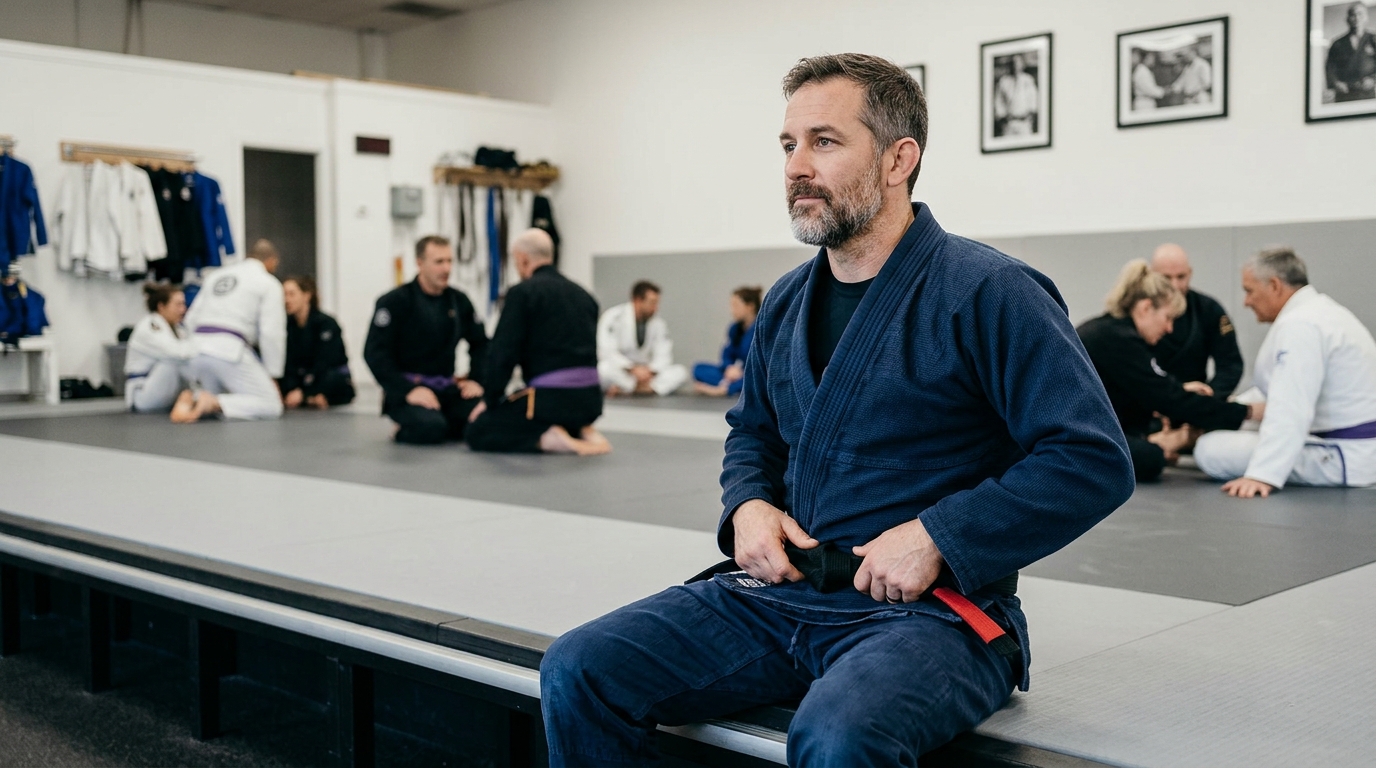
Starting Brazilian Jiu-Jitsu in your forties is a viable and rewarding path, provided you prioritize joint health, patience, and technical precision over brute strength. At Knoxville Martial Arts Academy, we emphasize that age is a number, not a barrier, when training is adapted to your body's current capabilities. This guide outlines the essential considerations for adults beginning their grappling journey later in life.
Physical Adaptation and Injury Prevention
The primary concern for beginners in their forties is the recovery rate. Recovery time is the critical variable that distinguishes younger athletes from older ones. Your body requires more time to repair micro-tears in muscles and connective tissue after intense grappling sessions. Ignoring this biological reality leads to overuse injuries that can sideline you for months.
At KMAA, we teach students to listen to their bodies. We do not encourage pushing through sharp pain. Instead, we focus on controlled intensity. You might train at 70% effort during sparring to protect your joints while still developing technique. This approach allows you to accumulate training volume without accumulating damage. Consistency beats intensity for the older beginner.
Warm-ups are non-negotiable. A proper warm-up increases blood flow to the joints and prepares the muscles for the dynamic movements of BJJ. We incorporate mobility work into our classes to maintain range of motion. This is not just for flexibility; it is for joint health. If you have pre-existing conditions, consult a physician before starting any new physical program.
Technical Focus Over Physical Power
Brazilian Jiu-Jitsu is often described as a chess match played on the ground. Technique is the primary mechanism of control in BJJ, not raw strength. This is the most encouraging aspect for beginners in their forties. You do not need to be the strongest person in the room to succeed. You need to be the most efficient.
Our curriculum at KMAA's Brazilian Jiu Jitsu program is designed to teach leverage and physics. We filter traditional techniques through the lens of practical application. If a move requires excessive strength to execute, it is not the right move for a beginner. We teach you to use your opponent's weight against them. This principle works regardless of your age or size.
Patience is a technical skill. Younger students often rush to finish a submission, leading to mistakes. Older students tend to be more patient, which is a significant advantage. You learn to set traps and wait for the opponent to make a mistake. This strategic mindset is more valuable than explosive power in the long run.
The Ecological Approach to Learning
Traditional martial arts training often relies on rote memorization of static techniques. Ecological Dynamics is a training method that focuses on adapting to changing environments rather than repeating fixed patterns. At KMAA, we use the Constraints-Led Approach (CLA) to teach BJJ. This means we create game-like scenarios where you must solve problems in real-time.
This method is particularly beneficial for older beginners. It builds neural pathways for adaptability. Instead of memorizing a single sequence, you learn how to react to different pressures. This keeps your brain engaged and prevents the training from becoming stale. It also reduces the risk of injury because you are learning to move fluidly rather than rigidly.
We reject the