

Mastering kickboxing is a journey that moves from basic movement patterns to complex, high-pressure combat scenarios. At Knoxville Martial Arts Academy, we view this progression not as a rigid ladder, but as a series of developmental phases where each stage builds the foundation for the next. Understanding these stages helps you set realistic expectations and stay motivated as you advance through your training.
1. Foundation and Movement Mechanics
Focus: Stance, balance, and basic striking mechanics.
This initial phase typically lasts 4 to 8 weeks. You will learn the fundamental stances, footwork patterns, and the biomechanics of basic punches and kicks. The goal is to build muscle memory for safe and effective movement. At this stage, you are not expected to fight; you are expected to move with intent and control.
2. Technical Isolation and Drilling
Focus: Refining individual techniques in controlled settings.
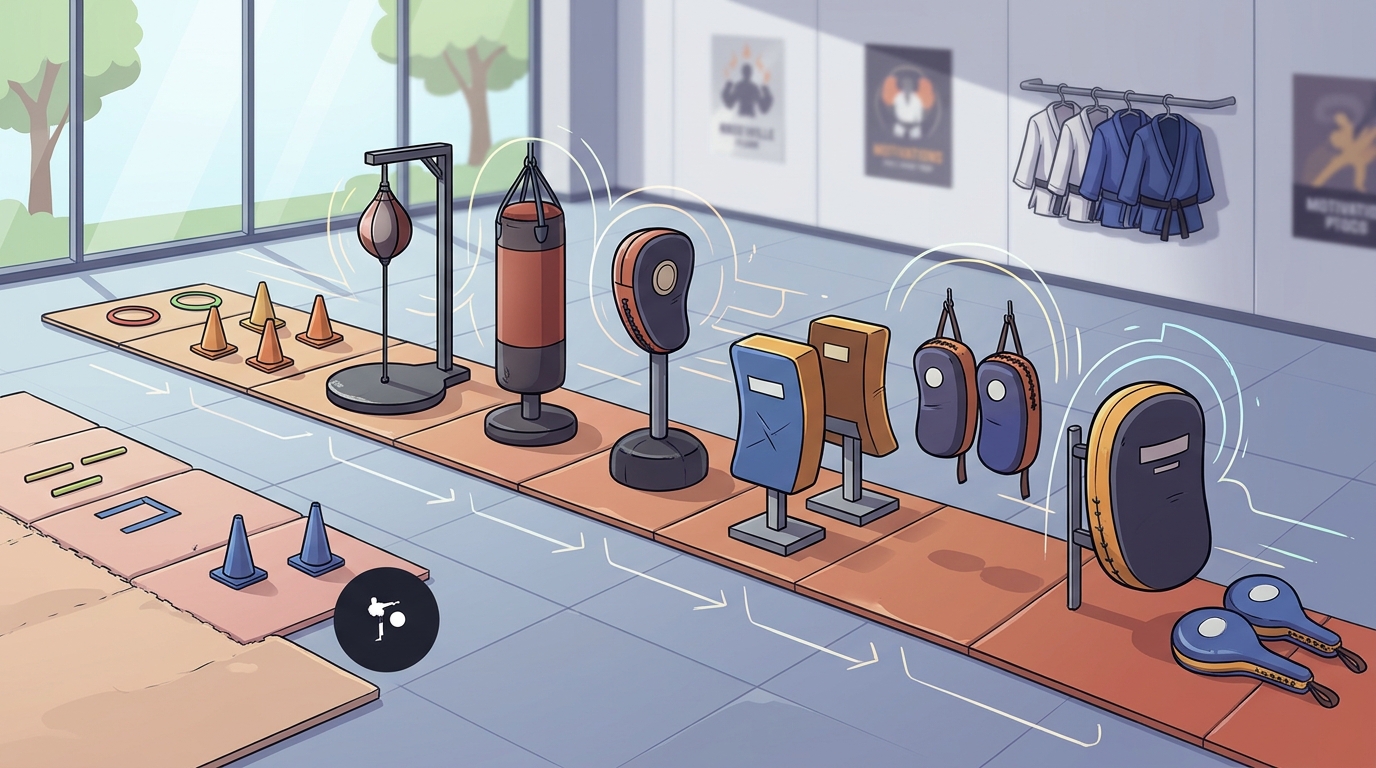
Spanning roughly 2 to 3 months, this stage involves repetitive drilling of specific techniques. You will practice combinations in the air or against a stationary partner. The emphasis is on precision, timing, and power generation. This phase ensures that your basic tools are sharp before you introduce resistance.
3. Partnered Resistance and Feedback
Focus: Applying techniques against a resisting opponent.
Usually occurring between 3 and 6 months into training, you begin to apply your skills against a partner who offers light to moderate resistance. This is where you learn to adjust your timing and distance. You will experience failure and success in a safe environment, which is critical for building adaptability.
4. Live Sparring and Game Simulation
Focus: Decision-making under pressure and chaos.
From 6 to 12 months, the training shifts to live sparring and game-like scenarios. You must make split-second decisions about when to strike, when to defend, and when to retreat. This stage tests your technical knowledge in a dynamic environment. It is often the most challenging phase because it exposes gaps in your skill set.
5. Strategic Integration and Fight IQ
Focus: Developing a personal game plan and tactical awareness.
Between 1 and 2 years, you begin to integrate your skills into a cohesive strategy. You learn to read opponents, manage energy, and exploit weaknesses. This stage is about becoming a tactician rather than just a technician. You will start to develop a unique style that suits your physical attributes and mental preferences.
6. Advanced Conditioning and Pressure Testing
Focus: Maintaining performance under extreme fatigue.
From 2 to 3 years, the focus shifts to high-intensity conditioning and pressure testing. You will train to maintain technical precision even when exhausted. This phase builds the mental and physical resilience required for high-level competition or self-defense scenarios. It is where the difference between a good student and an elite athlete becomes apparent.
7. Mastery and Continuous Evolution
Focus: Refining details and adapting to new challenges.
Mastery is a lifelong process that begins after 3 years of consistent training. At this level, you are constantly refining your details and adapting to new opponents and techniques. You may begin to teach others or compete at higher levels. The journey never truly ends, as there is always more to learn and improve.
Choosing Your Path
The timeline for each stage varies based on your prior athletic experience, frequency of training, and individual learning pace. Consistency is the most critical factor in progressing through these stages. If you are looking to start this journey, consider how your schedule aligns with the demands of each phase.
Frequently Asked Questions
How long does it take to learn basic kickboxing?
Most students can perform basic combinations with reasonable form within 4 to 8 weeks of consistent training. This initial phase focuses on movement mechanics and safety.
Do I need to spar to progress in kickboxing?
Sparring is essential for developing fight IQ and adaptability. While you can learn techniques without sparring, you will not develop the ability to apply them under pressure until you engage in live training.
Can I skip the foundational stages?
No, skipping foundational stages often leads to bad habits and increased injury risk. Each stage builds the necessary base for the next, ensuring long-term progress and safety.
How often should I train to progress through the stages?
Training 2 to 3 times per week is generally recommended for steady progression. More frequent training can accelerate progress, but consistency is more important than intensity.
Is kickboxing suitable for beginners with no athletic background?
Yes, kickboxing is accessible to beginners. The training starts with basic movements and gradually increases in complexity, allowing you to build fitness and skill simultaneously.
Start Your Training Journey
Ready to begin your progression through the stages of kickboxing? Knoxville Martial Arts Academy provides a structured environment where you can safely advance from foundational movements to advanced combat skills. Our coaches guide you through each phase, ensuring you build a solid base before moving to the next level. To plan your visit, to schedule your introductory session.