
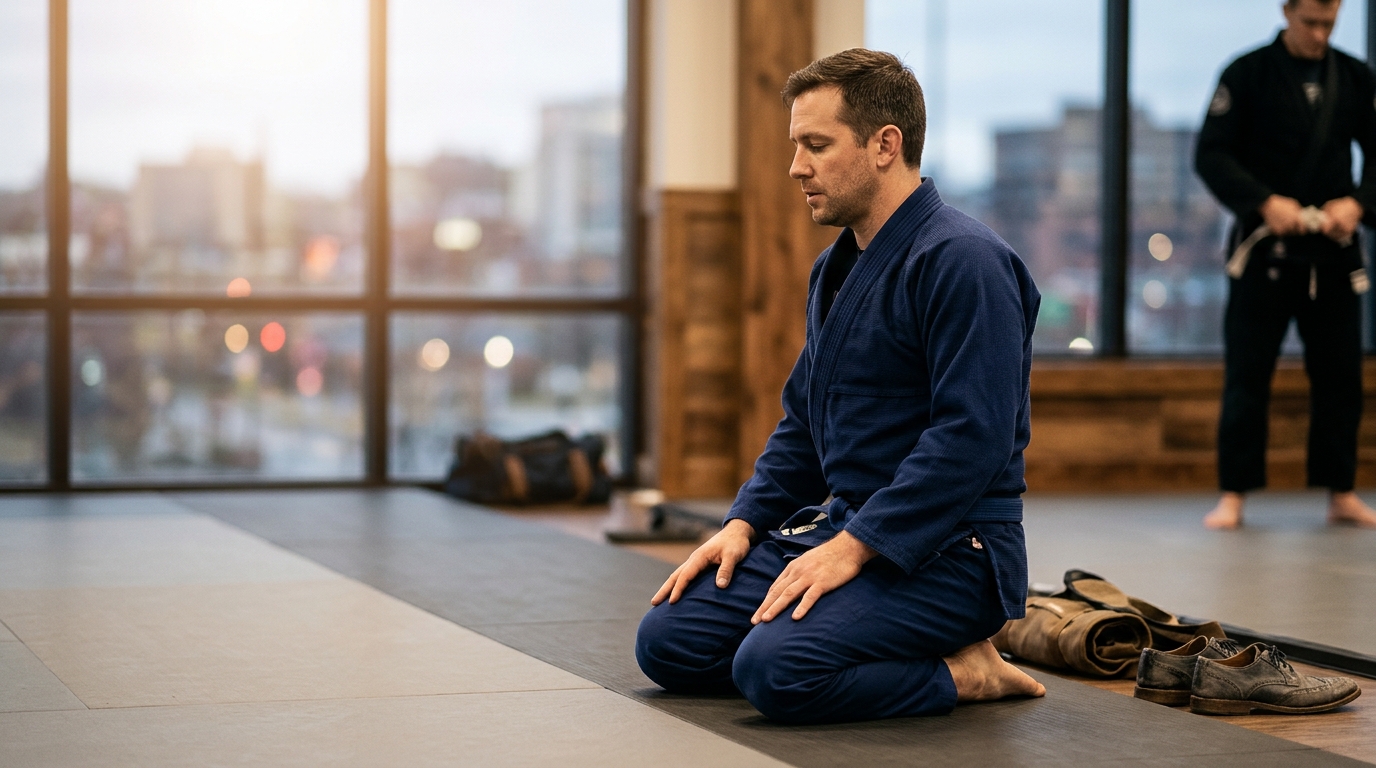
High-pressure careers often leave professionals with chronic tension and mental fatigue. Brazilian Jiu-Jitsu offers a physical and mental escape that builds resilience through controlled resistance. At Knoxville Martial Arts Academy, we use these specific grappling methods to help busy individuals decompress and sharpen their focus.
1. The Closed Guard
Takeaway: Establishing a safe perimeter allows you to control the pace of the interaction.
The closed guard is a fundamental position where you wrap your legs around your opponent to create a defensive barrier. This position forces the opponent to work against your hips and legs, which requires significant energy from them. For a professional, this mirrors the ability to set boundaries in a workplace, ensuring that you are not overwhelmed by external demands. You dictate the tempo, allowing you to breathe and think clearly while the pressure is applied to the other person.
2. The Kimura Lock
Takeaway: Applying controlled pressure to a joint forces the opponent to yield without brute force.
The kimura is a shoulder lock that relies on leverage and precise angle control rather than raw strength. Executing this technique requires you to remain calm while your opponent struggles to escape the hold. This mental state of controlled aggression helps professionals practice staying composed when a situation feels out of their control. It teaches the brain that pressure can be managed through technical precision and patience.
3. The Armbar
Takeaway: Hyperextending a joint safely teaches the value of yielding to avoid injury.
The armbar is a submission that targets the elbow by extending it against its natural range of motion. Learning to apply this technique requires you to understand the exact point of pain and the exact point of safety. For professionals, this is a lesson in knowing when to push and when to back off. It builds the mental toughness to recognize limits and adjust your approach before a situation becomes damaging.
4. The Triangle Choke
Takeaway: Creating a closed loop around the neck requires absolute focus and spatial awareness.
The triangle choke uses your legs to form a triangle around your opponent's head and one arm. This technique demands that you maintain specific angles and tension to be effective. The intense focus required to hold the triangle helps clear the mind of distracting thoughts, acting as a form of active meditation. It forces you to be present in the moment, which is a critical skill for managing workplace anxiety.
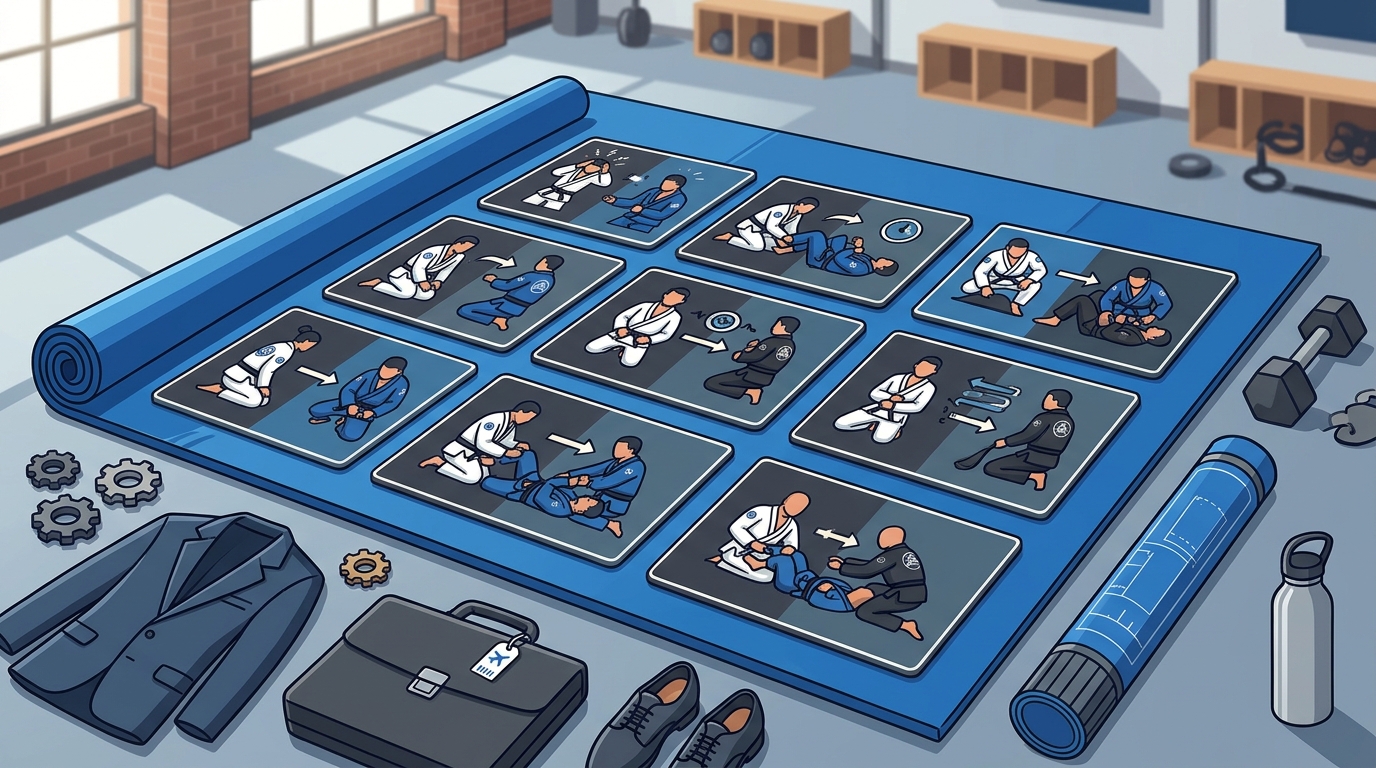
5. The Guillotine Choke
Takeaway: Controlling the head and neck allows you to dictate the opponent's movement.
The guillotine is a choke that wraps around the opponent's neck and head, restricting their ability to move freely. This position requires you to maintain a strong base and control the opponent's posture. For professionals, this represents the ability to control the narrative in a difficult conversation. By controlling the opponent's head, you control their options, which reduces the chaos of the interaction.
6. The Rear Naked Choke
Takeaway: Securing a dominant position allows you to apply pressure with minimal effort.
The rear naked choke is applied from behind, where you have a dominant position over your opponent. This technique relies on the angle of your arm and the tension of your grip. It teaches professionals the value of positioning, showing that the best outcomes often come from being in the right place at the right time. It is a lesson in efficiency and strategic advantage.
7. The Delegation of Pressure
Takeaway: Using your body weight to apply force reduces the need for muscular exertion.
Delegation of pressure is a concept where you use your hips and body weight to apply force to a hold. This allows you to maintain a submission without using your arms or legs for the entire duration. For professionals, this is a metaphor for delegating tasks and managing workload. It teaches you to use the system and your resources to achieve your goals, rather than burning out by doing everything yourself.
Choosing the Right Technique for Your Mindset
Selecting the right technique depends on your current mental state. If you feel overwhelmed, start with the closed guard to establish boundaries. If you feel stagnant, try the kimura to apply controlled pressure. If you need to clear your head, focus on the triangle choke for intense focus. At Knoxville Martial Arts Academy, our coaches help you find the right balance for your personal growth. according to Why ISTQB Exams
Frequently Asked Questions
Do I need to be a fighter to learn these techniques?
No, you do not need to be a fighter. These techniques are used for self-defense, fitness, and mental health. Many professionals train to build resilience and manage stress.
How often should I train to see mental benefits?
Consistency is key. Training two to three times a week is often enough to build the habit and see improvements in focus and stress management.
Is Brazilian Jiu-Jitsu safe for beginners?
Yes, when trained under proper supervision. At Knoxville Martial Arts Academy, we prioritize safety and use a constraints-led approach to ensure you learn safely.
Can I learn these techniques if I am not athletic?
Yes, Brazilian Jiu-Jitsu is a sport of leverage and technique, not just strength. People of all fitness levels can learn and benefit from the training.
What is the best way to start?
The best way to start is to visit a local academy and try a class. At Knoxville Martial Arts Academy, we offer a welcoming environment for beginners to start their journey.
Start Your Journey at Knoxville Martial Arts Academy
Ready to build mental toughness and manage stress through the art of Brazilian Jiu-Jitsu? Join the community at Knoxville Martial Arts Academy. We provide a safe, supportive environment where you can learn these techniques and build the resilience you need for your professional and personal life. Explore our Brazilian Jiu-Jitsu program today.