
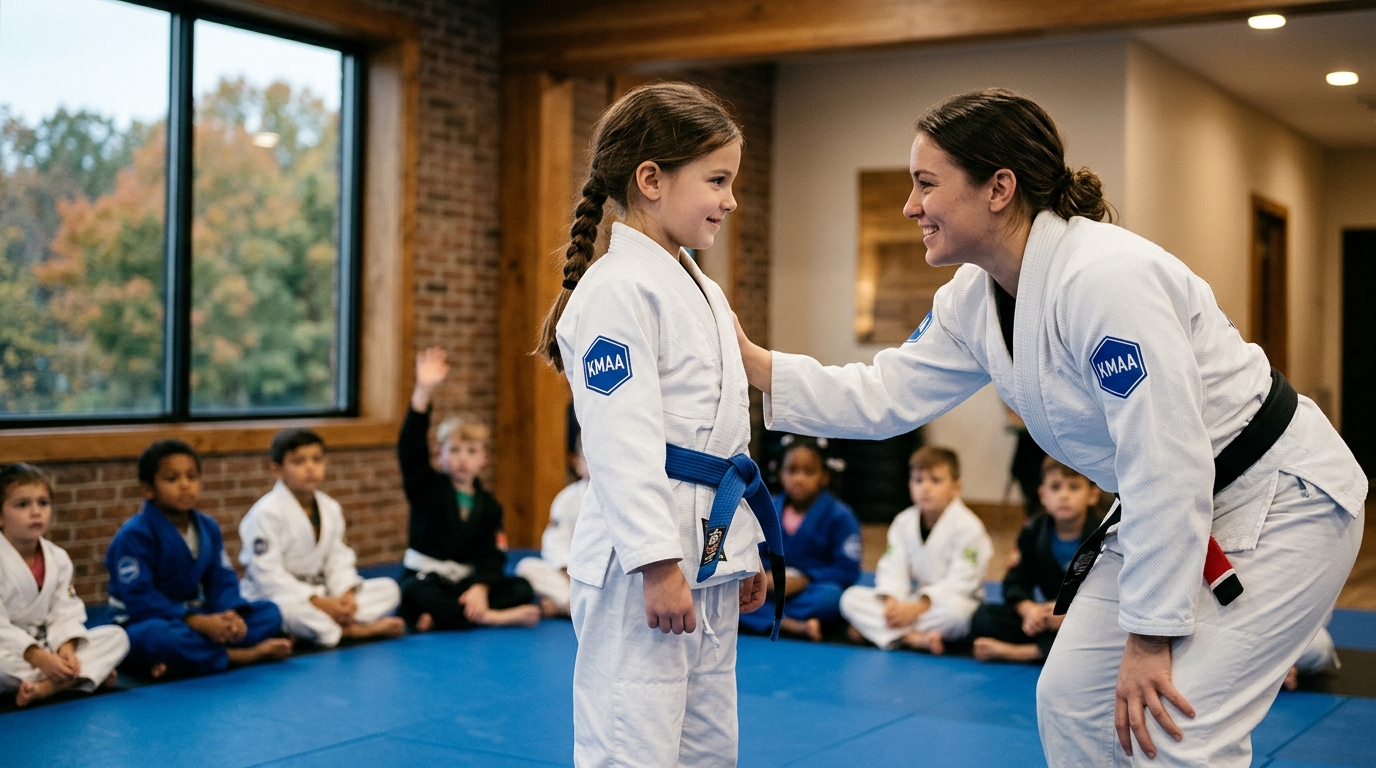
Choosing the right martial arts class in Knoxville requires looking beyond technique to find a program that actively builds a child's self-belief. Knoxville Martial Arts Academy (KMAA) focuses on this specific outcome by using ecological training methods that turn physical competence into lasting confidence. This guide covers how to evaluate local options, what to ask, how to verify claims, and what to expect from a structured youth program.
How to Choose: Separating Good from Bad
Many gyms teach martial arts through rote memorization, which often fails under pressure. A high-quality program for children uses a method known as Ecological Dynamics, which is a training approach that focuses on problem-solving and adaptation rather than rigid repetition. When you visit a facility, observe the class structure. If children are standing in lines performing identical punches at the same speed, the method is likely static. If they are moving in groups, reacting to partners, and solving physical puzzles, the training is alive.
Look for a curriculum that explicitly mentions "skill acquisition speed" or "adaptive training." At Youth Martial Arts programs, the goal is not just to learn a move, but to understand the physics behind it. A good option prioritizes the "why" over the "what." This distinction is critical because confidence comes from knowing you can handle a variable situation, not just from memorizing a script.
What to Ask: Specific Questions
Before committing to a membership, ask the director specific questions about their teaching methodology. Do not accept vague answers like "we are a family." Instead, ask: "How do you handle a child who is struggling with a technique?" A strong answer will describe a process of breaking the problem down into smaller, manageable constraints. Ask about their safety protocols. Specifically, inquire if their coaches undergo specialized training in consent and boundaries, not just background checks.
Another critical question is: "How do you measure progress?" If the answer is only belt promotions, be cautious. Look for programs that track behavioral and physical milestones, such as balance, coordination, and emotional regulation. At The KMAA Chronicles, coaches often discuss the importance of tracking these non-technical metrics. This ensures the child is growing as a person, not just as a fighter.
How to Verify: Checking Credentials
Verifying a coach's credentials in martial arts can be difficult because there is no single global governing body for all styles. However, you can verify the legitimacy of a program by checking their affiliation with recognized safety organizations. For example, CombatCare is a proprietary safety protocol adapted from the U.S. Center for SafeSport framework. If a gym claims to have a safety program, ask for the specific name of the framework they use and the duration of their coach onboarding. A one-day seminar is not the same as a multi-week intensive training program.
Check the coach's competitive history. While not every coach needs to be a professional, a background in competition provides context for the techniques taught. You can often verify this through public competition records or social media archives. Be wary of titles that are self-awarded. A legitimate credential is one that can be traced back to a recognized federation or a verifiable competitive record.
How It Works: The Process
Understanding the timeline helps set realistic expectations. A typical youth program follows a developmental arc. In the first few weeks, the focus is on fundamental movement skills: agility, balance, and coordination. This is often called the "ABCs" of athleticism. The child is learning to control their own body in space. This phase is crucial because it builds the physical foundation for all future learning.
As the child becomes comfortable, the training introduces "Constraint-Led Games." These are scenarios where the rules are slightly modified to force the child to think. For example, they might have to escape a hold while keeping their feet on a specific line. This builds neural pathways for adaptability. The process is iterative. The child fails, receives feedback, adjusts, and succeeds. This cycle of failure and correction is where resilience is built. It is not a linear path of perfect execution; it is a messy, dynamic process of discovery.
What It Costs: Price Drivers
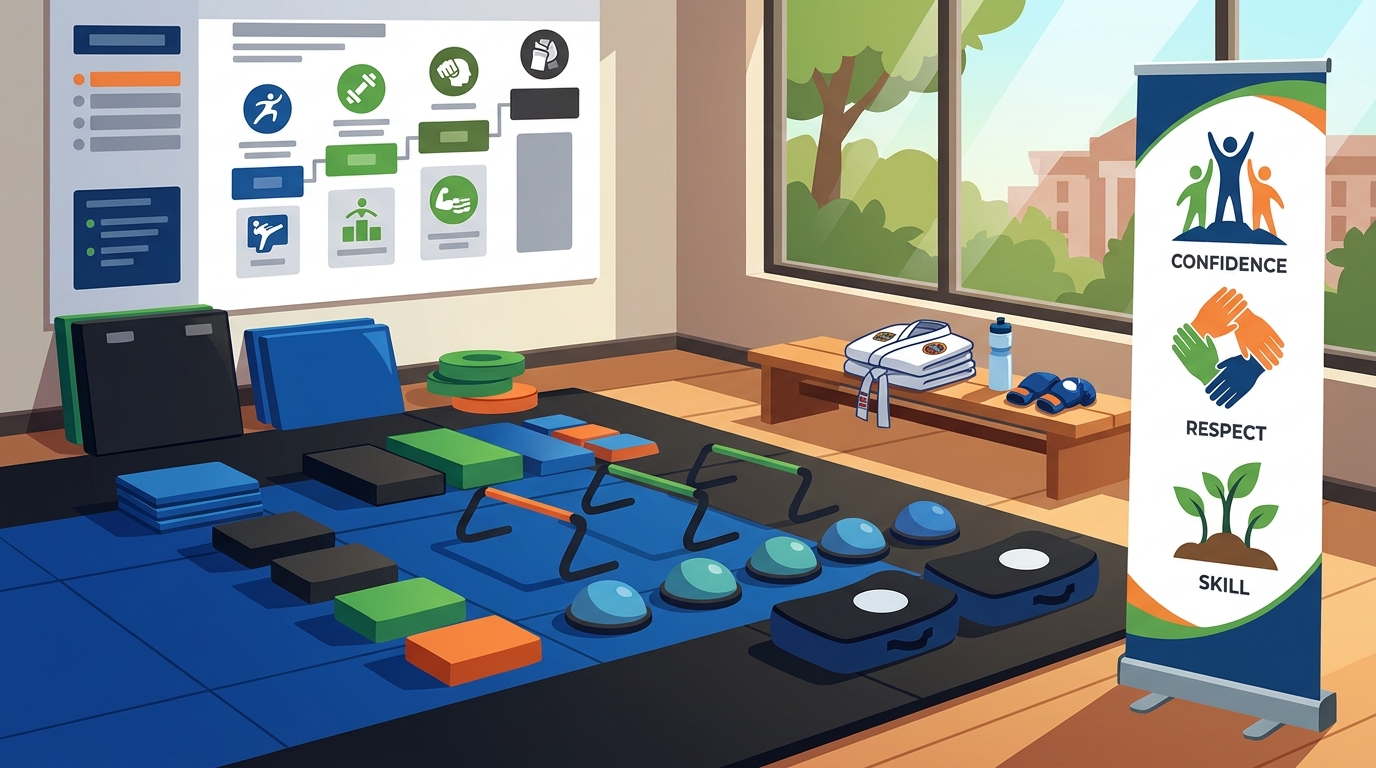
The cost of martial arts training varies based on several factors. The primary driver is the ratio of coaches to students. A smaller class size allows for more individual attention, which increases the cost but improves the learning outcome. Another factor is the facility itself. A dedicated training space with proper mats and equipment costs more to maintain than a multi-purpose room. Finally, the depth of the curriculum matters. A program that includes data-driven tracking and specialized safety training requires more resources to deliver.
When evaluating cost, consider the value of the time. A program that accelerates skill acquisition may cost more per month but could save you years of stagnation. Look for transparency in pricing. Avoid gyms that hide fees for gear or testing. At Knoxville Martial Arts Academy, the focus is on providing a comprehensive experience that includes both technical training and character development. This holistic approach often justifies a premium price point compared to basic fitness-style classes.
What Goes Wrong: Common Mistakes
One common mistake is quitting when the child hits a plateau. Progress in martial arts is not linear. There will be weeks where the child feels stuck. This is a normal part of the learning process. If you quit at the first sign of frustration, you teach the child that giving up is the solution to difficulty. Instead, use these moments as teaching opportunities. Discuss the concept of a "Growth Mindset" with your child. Explain that struggle is a sign of growth, not failure.
Another mistake is comparing your child to others. Every child develops at their own pace. Comparing them to a more advanced student can damage their confidence. Focus on their personal progress. Did they try harder this week than last? Did they listen to the coach? Did they help a partner? These are the metrics that matter. Avoid putting pressure on your child to "win" or "dominate." The goal is self-improvement, not competition with peers.
Versus Alternatives: Comparing Options
Martial arts is often compared to other youth activities like soccer, dance, or gymnastics. While all of these activities have value, martial arts offers a unique combination of physical and mental challenges. In team sports, a child's success is often dependent on the performance of their teammates. In martial arts, the child is responsible for their own progress. This individual accountability builds a different type of confidence. It is the confidence that comes from knowing you can handle a challenge on your own.
Compared to pure fitness classes, martial arts provides a structured curriculum with clear milestones. This structure helps children understand what they are working toward. Fitness classes can be great for cardio, but they often lack the problem-solving element that builds cognitive resilience. Martial arts requires the child to think while they move. This dual demand on the brain and body is what makes it a powerful tool for building confidence.
| Activity Type | Primary Focus | Confidence Builder | Accountability |
|---|---|---|---|
| Team Sports | Cooperation and Cardio | Belonging to a group | Shared with team |
| Fitness Classes | Endurance and Movement | Physical capability | Individual effort |
| Martial Arts | Problem Solving and Control | Competence under pressure | Individual mastery |
For a Specific Situation: Shy or Anxious Kids
For children who are shy or anxious, the environment is just as important as the curriculum. Look for a gym that emphasizes a supportive culture. At KMAA Culture, the concept of "Whānau" (extended family) is central. This means that the community is designed to be inclusive and non-judgmental. A shy child needs a space where they are not forced to perform but are encouraged to participate at their own pace.
Observe how the coaches interact with the quieter students. Do they give them space? Do they offer gentle encouragement? A good coach will notice when a child is overwhelmed and adjust their approach. They might pair the child with a supportive partner or give them a specific, manageable task. This individualized attention helps the child feel safe enough to take risks. Over time, these small risks build into a robust sense of self-belief.
Rules and Protections: Safety Standards
Safety in martial arts is not just about physical injury prevention; it is about emotional and psychological safety. A reputable academy will have clear rules regarding consent and boundaries. These rules should be taught to the students as well. Children should understand that they have the right to say "no" to a hold or a technique. This empowers them and teaches them to respect their own limits.
Check if the gym has a code of conduct for coaches. This code should outline appropriate physical contact, communication boundaries, and reporting procedures. The presence of a formal safety protocol, such as CombatCare, indicates that the gym takes these issues seriously. It shows that the organization has invested in training its staff to recognize and prevent harmful behaviors. This level of institutional commitment is a strong indicator of a safe environment.
Local Specifics: The Knoxville Context
Knoxville has a vibrant martial arts community, but not all gyms are created equal. The local scene includes a mix of traditional dojos and modern performance-based academies. When choosing a local option, consider the commute. A program that is convenient for your family is more likely to be sustained. Look for gyms that are accessible and have a strong local reputation. Read reviews from other parents in the area. Pay attention to comments about the culture and the coaches' interactions with children.
Also, consider the diversity of the student body. A gym that attracts a wide range of students, from beginners to advanced practitioners, creates a dynamic learning environment. At Knoxville Martial Arts Academy, the mix of ages and skill levels is intentional. It ensures that no one feels like an outsider. This diversity fosters a sense of belonging that is crucial for long-term engagement. The local context matters because the community you join will shape your child's experience.
Timing: When to Act
There is no single "right" time to start martial arts. However, certain periods can be more advantageous. Starting at the beginning of a new school year can help a child establish a routine. It also allows them to build a support network of peers who are also starting fresh. Alternatively, starting in the middle of the year can be beneficial if the child is struggling with confidence at school. The change of environment can provide a fresh start.
Consider your child's current stress levels. If they are already overwhelmed with school and other activities, adding a new commitment might be too much. In this case, it might be better to wait until a less stressful period. The goal is to find a balance that allows the child to engage fully without burning out. Listen to your child. If they are excited about the idea, that is a good sign. If they are hesitant, take the time to address their concerns before committing.
Results Over Time: Long Term Outcomes
The benefits of martial arts for confidence are cumulative. In the short term, you may see improvements in physical coordination and basic social skills. Over the long term, the child develops a resilient mindset. They learn to handle failure, manage stress, and set goals. These are transferable skills that apply to school, work, and relationships. The confidence built on the mat translates into confidence in the classroom and in social situations.
Long-term practitioners often report a sense of identity and purpose. They know who they are and what they are capable of. This self-awareness is a powerful tool for navigating the challenges of adolescence and adulthood. The process of earning a belt, for example, teaches patience and perseverance. It shows the child that hard work pays off. This lesson is invaluable. It is not just about the belt; it is about the journey to earn it.
Key Takeaways
- Look for programs that use Ecological Dynamics or problem-solving methods rather than rote memorization.
- Ask specific questions about how the gym handles struggling students and measures progress.
- Verify coach credentials by checking for recognized safety frameworks and competitive history.
- Understand that progress is non-linear and that failure is a normal part of the learning process.
- Consider the cost in terms of value, including class size, curriculum depth, and facility quality.
- Avoid comparing your child to others; focus on their personal growth and effort.
- For shy children, prioritize a supportive, inclusive culture over aggressive competition.
- Check for formal safety protocols and codes of conduct for coaches and students.
Frequently Asked Questions
What is the best age to start martial arts for confidence building?
Children can start as young as 3 or 4 years old, depending on the program. For confidence building, the key is to find a program that matches the child's developmental stage. Younger children benefit from play-based learning, while older children can handle more structured problem-solving. There is no single "best" age; the best age is when the child is ready and willing to participate.
How long does it take to see improvements in confidence?
Improvements can be seen within a few weeks, but significant changes often take several months. The initial phase focuses on physical competence, which lays the foundation for confidence. As the child masters new skills and overcomes challenges, their self-belief grows. Consistency is key. Regular attendance is more important than intensity.
Do I need to buy special gear to start?
Most gyms require basic gear such as a gi (for BJJ) or athletic wear (for MMA/Kickboxing). Some gyms provide starter kits or discounts for new students. Check with the specific academy for their requirements. At KMAA Store, you can find the necessary equipment. It is a small investment that shows commitment to the program.
Is martial arts safe for children?
Martial arts is generally safe when taught by qualified instructors in a controlled environment. The risk of injury is low, especially in youth programs that focus on technique and control. Look for gyms with strong safety protocols and experienced coaches. The benefits of learning self-control and respect often outweigh the minimal physical risks.
Can martial arts help with bullying?
Martial arts can help children develop the confidence and physical competence to deter bullying. It teaches them to set boundaries and handle conflict calmly. However, it is not a guarantee against bullying. The goal is to build resilience and self-belief, which helps children navigate difficult social situations. It is a tool for empowerment, not a shield against all problems.
What if my child quits after a few months?
Quitting is a common part of the learning process. It is important to talk to your child about why they want to quit. If it is due to frustration, use it as a teaching moment about perseverance. If it is due to a bad fit with the gym or coach, consider trying a different program. Do not force them to continue if they are unhappy, but encourage them to finish a set period (e.g., one month) before making a final decision.
Conclusion
Choosing the right martial arts class for your child is a significant decision that can have a lasting impact on their development. By focusing on programs that prioritize problem-solving, safety, and a supportive culture, you can provide your child with the tools they need to build lasting confidence. Knoxville Martial Arts Academy offers a comprehensive approach that combines technical training with character development, making it a strong option for families in the Knoxville area. Take the time to visit, ask questions, and observe the culture before making your decision. Your child's journey to confidence starts with the right environment.